
Bat Tiles in West Sussex
Heritage Tiles: Emblematic of the finest craftsmanship
Heritage tiles are the professional roofer's choice for the highest quality clay roof tiles. We pride ourselves in manufacturing, stocking, and delivering the very finest in prestige clay roof tiles.
Heritage Tiles have several tile ranges that satisfy every architectural requirement. Vintage and historic properties right up to modern new builds are covered by the diverse range of clay roof tiles that we stock.
So, whether you are in the building trade, or simply wish to choose your own tiles, Heritage Tiles have the right product for your specific requirements.
What Heritage Tiles have to offer our customers?
- We offer specification and technical solutions to help you achieve the perfect build.
- We also offer expert design advice to all our customers.
- We are happy to engage in site visits with our clients.
- We have stockists and distributors throughout the United Kingdom to ensure that we can provide our expert service to a wider area.
- We can provide estimated quantities from plans supplied by our clients.
- We offer battening plans.
- We can deliver a standard and bespoke colour choice for our clay tile products.
- All our tiles are assessed and approved by Lucideon.
- We provide a nationwide delivery and collection service.
The ranges of clay roof tiles we supply.
The Clayhall Range of roof tiles:
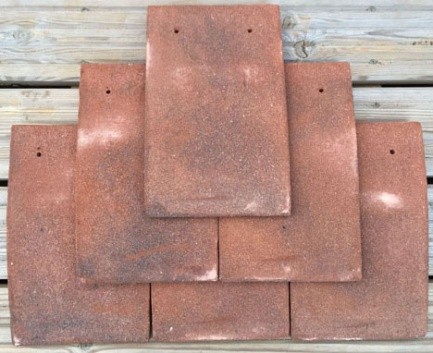
Clayhall Medium Blend - Carefully crafted to replicate all the features of handmade the Clayhall hand crafted range of tiles offers an excellent alternative when budget restrictions are a concern, but without compromising quality or durability.
Clayhall Dark Blend - Quality and durability in a budget clay roof tile. The Clayhall dark blend is sure to turn heads.
Clayhall Red Blend - A beautiful rustic clay roof tile. The Clayhall red blend is a firm favourite with our customers.
Clayhall Hamlet Mix - The Clayhall Hamlet mix is a gorgeous light and sandy looking clay roof tile that is a perennial favourite in the building trade.
Clayhall Birchwood Mix - The Clayhall Birchwood mix offers a gorgeous blend of lighter and darker shades in this diverse clay roof tile. If you are concerned that your roof tiles could look monotonous, the Clayhall Birchwood mix is the clay roof tile to choose.
The Conservation Range of roof tiles
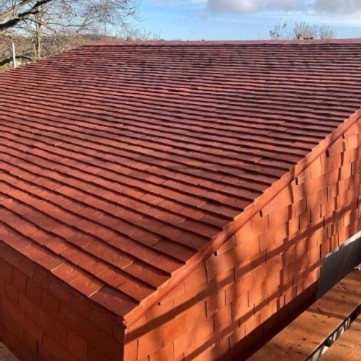
The Conservation range of roof tiles are available in a range of distinctive colours, created by using a very fine sand, The Conservation Weathered; A natural warm tone, achieving an instant mellow and settled look and The Conservation Red; perfect for vertical tiling especially suited for villages and hamlets with olde world vernacular charm.
Manufactured using high quality clay, achieving high strength and durability properties, giving homeowners and contractors peace of mind for many years to come. The conservation range comes with a complete set of associated fittings, including Hog Back Ridge, Half Round Ridge, Bonnet Hips, Valley tiles and External Angles.
The Conservation range of clay roof tiles comes in the following variations:
- Conservation Red
- Conservation Weathered
- Conservation Dark
Conservation Peg Tile
Plain clay roofing tiles laid to a double lap have been used for roof covering in England since before the Norman Conquest and tiles dating back to Roman Times have been discovered under excavation. From the outset clay plain tiles were made incorporating fixing features.
The Classic Edwardian roof tile
The Classic range of plain tiles is one of the finest ranges of clay tiles.
We source only the best raw materials for our craftsman to create beautifully handmade clay tiles of the highest quality and durability.
Tile Fittings available from Heritage Tiles
There are many fittings that are available from us a Heritage Tiles to complete your build to perfection. We stock and supply the following:
- Gable Tile
- Eave Tile
- Baby Porch Ridge
- 90 Degree Ext. Angle
- Universal Bonnet Hip
- Half Round Ridge
- Hogs Back Ridge
- Mono Ridge
- Third Round Ridge
- Universal Valley
- Ornamental Club
- Bat Tile Set
Bat Tiles:
Provide help for our bats with our range of bat friendly roof tiles.
Did you know that all UK bats and their roosts are protected by law? The Wildlife and Countryside Act introduced in 1981, gave legal protection to all bat species and their roosts in England.
Distinct species of bats prefer differing places to roost. The two most usually found species of bat in the UK are the Pipistrelle and Brown Long-Eared Bat. Pipistrelle prefer confined spaces such as under tiles on roofs and hanging spaces. The Brown Long-Eared Bat prefer roof timbers and ridges inside lofts. Heritage Clay Tiles can provide purpose made access points within your roof tiles or ridge tiles. The Bat Tile Set can form part of a mitigation package required by law for existing roosts or as potential access where a roost had not previously been present.
Select a Blend
Getting the right blend for your roofing project can feel daunting, but with our blend generator you can mix and match various blends of tiles to achieve the perfect blend.
Click here to make use of our online tool to choose your own unique blend.
Because our strict quality control provides a consistent tile size you can mix assorted styles and colours of tiles to make your roof unique to you. Please use the tool below to experiment with various blends.
Adjust the sliders to set the ingredients for your desired blend then click on the update mix button.
Alternatively click on any blend or tile to display it.
Whatever type of clay roof tile you want, Heritage Tiles will be able to help.
Bat Tiles
Creating access for bats using bat tiles
Creating access for bats is one of the simplest and most effective ways to protect bat roosts in the long term. As bats are legally protected in England, ensuring that suitable access points are retained or replaced during building work is essential. Bat tiles provide a practical and discreet solution, allowing buildings to offer safe access and roosting opportunities for a range of bat species.
Why creating bat access is important
Many bat species use buildings as roosts, entering through small gaps, cracks, or lifted tiles before crawling into sheltered spaces. Modern construction and renovation often remove these features, unintentionally blocking access to existing or potential roosts. Without appropriate access points, bats may be unable to return to traditional roosting locations.
Creating access for bats ensures that roosts remain usable and that bats can continue to rely on buildings for shelter. Bat tiles are specifically designed to recreate these access points in a controlled and long lasting way.
How bat tiles create safe access for bats
Bat tiles are integrated into roofs or walls to provide purpose built access points that lead directly into a roosting space. For most UK bat species, access gaps created by bat tiles are exceedingly small, as these bats typically land on the building and crawl inside rather than flying directly into the roost.
When installed correctly, bat tiles create access gaps that are subtle and unobtrusive, often going unnoticed by people. This makes bat tiles ideal for residential, commercial, and public buildings where appearance and functionality must be maintained.
Larger bat species, such as horseshoe bats, have different access requirements and may need larger openings. In appropriate situations, bat tiles can be incorporated into wider design solutions that provide suitable access while still fitting the style and character of the building.
Location of bat tile access points
The location of bat access is critical. Where possible, bat tiles should be installed close to existing or historic access points to ensure bats can easily find and reuse the roost. The position of bat tiles should always reflect the type of roost being provided and the bat species likely to use it.
By carefully placing bat tiles, access can be created in a way that supports bats while avoiding disturbance to the building's occupants.
Benefits of using bat tiles
Bat tiles provide permanent access and roosting opportunities once installed. Unlike temporary solutions, bat tiles are built into the structure of the building, making them durable, weather resistant, and maintenance free. This reliability is important, as bats often return to the same roosts year after year.
By creating consistent access points, bat tiles help ensure that bats are not excluded from buildings during future maintenance or roof work.
Creating access for bats through responsible design
Using bat tiles to create access for bats demonstrates a commitment to responsible and wildlife friendly development. Bat tiles allow buildings to meet conservation requirements while reducing pressure on natural roosting sites.
By incorporating bat tiles into new developments and renovation projects, access for bats can be created in a way that supports protected species and contributes positively to biodiversity.
Conclusion
Creating access for bats is a vital part of bat conservation, and bat tiles offer a simple, effective, and long term solution. By using bat tiles to provide discreet access points and secure roosting spaces, buildings can play an active role in protecting bat species now and into the future.
A little information about West Sussex
West Sussex: a county of downs, harbours, and old stories
West Sussex has a rare ability to feel broad and varied without ever losing its sense of cohesion. In one direction there is the English Channel and a string of coastal towns, beaches, and harbours. In another there are the chalk ridges of the South Downs, cut with ancient tracks, hill forts and sweeping views. Beyond them lies the Weald, with its woods, older lanes and market towns that still seem shaped by a slower rhythm. This mixture gives West Sussex real substance and presence. It is not simply a county of attractive scenery. It is a county where Roman Britain, Saxon settlement, medieval power, smuggling lore, and village legend all remain close to the surface. The result is a place that feels layered, recognisable, and full of local character.
West Sussex: From Roman palace to Norman stronghold
West Sussex has been settled for an extraordinarily long time, and many of its best-known landmarks reveal just how far back that story runs. The county contains prehistoric hill forts such as Cissbury Ring and the Trundle, places that still dominate their landscapes and make the depth of local history immediately visible. During the Roman period, the area became especially important through the city now known as Chichester and through Fishbourne Roman Palace, one of the most impressive Roman residential sites in northern Europe. Fishbourne is not merely a curiosity. Its mosaics, layout and scale demonstrate that this part of the south coast once held real status within Roman Britain. The Roman imprint can still be felt in the form of roads, archaeology, and the enduring centrality of Chichester as a place of administration, culture, and movement.
After the Roman era, West Sussex formed part of the old kingdom of Sussex, and its Saxon and early medieval identity still matters to the way the region is understood today. The Norman Conquest then altered the landscape dramatically. Castles and fortified sites helped secure the coast and shape local power, with Arundel becoming one of the county's defining strongholds. Arundel Castle still dominates the town and remains one of the most striking reminders of Norman authority in southern England. Elsewhere, places such as Bramber preserve the remains of that military and administrative reordering, while churches, market centres and estates reflect the longer consolidation of wealth and influence. Through later centuries, agriculture, market exchange, and the movement of people between countryside and coast shaped the county into a varied but coherent whole. West Sussex never became only one thing, and that variety is part of its lasting appeal.
Places that give West Sussex its shape
Chichester is one of the county's key reference points because it gathers so much of West Sussex into one place. It has Roman origins, a medieval cathedral, handsome Georgian streets, and easy access to both countryside and coast. Nearby Fishbourne Roman Palace extends the historical picture, while Bosham, with its harbour setting and ancient church, adds tidal beauty and long historical associations. Arundel offers a vastly different but equally characteristic West Sussex experience. Its castle, cathedral, river setting, and independent streets combine to create one of the county's most memorable townscapes. Petworth, crowned by Petworth House and its art collection, links West Sussex to aristocratic patronage, landscape design and a strong tradition of antiques and market-town life.
The county's landscapes are just as important as its built heritage. The South Downs cross West Sussex from east to west, offering broad chalk ridges, open views, and some of the county's most distinctive walking country. Cissbury Ring above Worthing is one of the best-known prehistoric sites in the area, while Chanctonbury Ring adds its own dramatic silhouette and folktale reputation. Along the coast, places such as Worthing, Littlehampton, Bognor Regis, and Selsey show different sides of seaside identity, from traditional resort atmosphere to working shoreline and estuary life. Chichester Harbour and the Witterings bring another dimension altogether, with sailing water, birdlife, and some of the county's most admired coastal scenery. Inland, Amberley, Midhurst, and Pulborough reveal a gentler West Sussex of bridges, stone, commons, and quiet streets, where the county's rural character remains especially clear.
West Sussex folklore on the downs and in the weald
West Sussex folklore is rich partly because the landscape itself encourages imagination. One of the most famous local legends surrounds Chanctonbury Ring, the ancient hilltop enclosure near Worthing. Folklore says that if a person walks around the ring seven times on a moonless night, the Devil may appear. Variations of the tale speak of ghostly Roman soldiers and other uncanny presences beneath the trees. The story has endured because the site already feels charged with age, weather, and isolation. West Sussex contains many such places where archaeology and atmosphere seem to strengthen one another. At the Devil's Jumps near Treyford, Bronze Age burial mounds became the basis for stories of the Devil leaping from hump to hump until stopped by a divine or heroic force. The folklore does not erase the archaeology. It sits beside it, giving the land another kind of meaning.
The county is also strongly associated with dragon lore. St Leonard's Forest near Horsham is linked with stories of a dragon said to have been fought by Saint Leonard, leaving marks in the landscape and helping to make the forest one of the county's most storied places. Around Lyminster, the legend of the Knucker dragon tells of a fearsome water creature living in a deep pool and finally overcome through local cunning rather than heroic grandeur. Smuggling traditions add yet another shade to West Sussex storytelling, especially in woodland and downland villages where tales of hidden routes, buried contraband and restless spirits have lingered. These legends matter because they keep West Sussex from feeling purely picturesque. They give the county edge, memory and a local voice that goes beyond guidebook description.
Interesting facts and local character of West Sussex
West Sussex combines an unusual amount of variety within one county. It includes a Roman palace of national importance, one of England's great cathedral cities, major downland landscapes, a long stretch of changing coastline and stately homes with internationally significant art collections. It is also a county shaped by contrast. Crawley and the area around Gatwick represent modern movement and development, while places only a short distance away still feel deeply rural. Goodwood brings motorsport, horse racing, and estate culture into the picture, showing that West Sussex can be ceremonial, sporting, and contemporary at the same time. The county is also associated with writers and artists, including William Blake's time at Felpham and the wider creative pull of the Sussex landscape. Even intricate details, such as church towers appearing across the downs or tidal creeks winding into Bosham and Chichester Harbour, help give West Sussex a recognisable visual identity.
West Sussex stands out because it offers depth in every direction. History runs from prehistoric earthworks to Roman luxury and Norman defence. Folklore ranges from devils on the hills to dragons in forest and water. The places themselves are equally varied, from cathedral city to harbour village, market town to seaside resort. That combination means West Sussex appeals not only through scenic value but through narrative richness. It is a county that feels lived in, remembered, and imagined all at once, which makes it a particularly distinctive location to visit.
Products available from Heritage Clay Tiles Ltd in East Sussex
Clay Roof Tiles in East Sussex
Clayhall Roof Tiles in East Sussex
Conservation Peg Tiles in East Sussex
Conservation Roof Tiles in East Sussex
Edwardian Roof Tiles in East Sussex
Georgian Roof Tiles in East Sussex
Handmade Clay Tiles in East Sussex
Handmade Roof Tiles in East Sussex
High Quality Roof Tiles in East Sussex
Traditional Clay Tiles in East Sussex
Traditional Roof Tiles in East Sussex
Victorian Roof Tiles in East Sussex
Products available from Heritage Clay Tiles Ltd in Essex
Conservation Peg Tiles in Essex
Conservation Roof Tiles in Essex
High Quality Roof Tiles in Essex
Traditional Clay Tiles in Essex
Traditional Roof Tiles in Essex
Products available from Heritage Clay Tiles Ltd in Hampshire
Clayhall Roof Tiles in Hampshire
Conservation Peg Tiles in Hampshire
Conservation Roof Tiles in Hampshire
Edwardian Roof Tiles in Hampshire
Georgian Roof Tiles in Hampshire
Handmade Clay Tiles in Hampshire
Handmade Roof Tiles in Hampshire
High Quality Roof Tiles in Hampshire
Traditional Clay Tiles in Hampshire
Traditional Roof Tiles in Hampshire
Victorian Roof Tiles in Hampshire
Products available from Heritage Clay Tiles Ltd in Hertfordshire
Clay Roof Tiles in Hertfordshire
Clayhall Roof Tiles in Hertfordshire
Conservation Peg Tiles in Hertfordshire
Conservation Roof Tiles in Hertfordshire
Edwardian Roof Tiles in Hertfordshire
Georgian Roof Tiles in Hertfordshire
Handmade Clay Tiles in Hertfordshire
Handmade Roof Tiles in Hertfordshire
High Quality Roof Tiles in Hertfordshire
Traditional Clay Tiles in Hertfordshire
Traditional Roof Tiles in Hertfordshire
Victorian Roof Tiles in Hertfordshire
Products available from Heritage Clay Tiles Ltd in Kent
Conservation Peg Tiles in Kent
Conservation Roof Tiles in Kent
High Quality Roof Tiles in Kent
Traditional Clay Tiles in Kent
Traditional Roof Tiles in Kent
Products available from Heritage Clay Tiles Ltd in London
Conservation Peg Tiles in London
Conservation Roof Tiles in London
Edwardian Roof Tiles in London
High Quality Roof Tiles in London
Traditional Clay Tiles in London
Traditional Roof Tiles in London
Victorian Roof Tiles in London
Products available from Heritage Clay Tiles Ltd in Surrey
Conservation Peg Tiles in Surrey
Conservation Roof Tiles in Surrey
Edwardian Roof Tiles in Surrey
High Quality Roof Tiles in Surrey
Traditional Clay Tiles in Surrey
Traditional Roof Tiles in Surrey
Victorian Roof Tiles in Surrey
Products available from Heritage Clay Tiles Ltd in West Sussex
Clay Roof Tiles in West Sussex
Clayhall Roof Tiles in West Sussex
Conservation Peg Tiles in West Sussex
Conservation Roof Tiles in West Sussex
Edwardian Roof Tiles in West Sussex
Georgian Roof Tiles in West Sussex
Handmade Clay Tiles in West Sussex
Handmade Roof Tiles in West Sussex
High Quality Roof Tiles in West Sussex
Traditional Clay Tiles in West Sussex
Traditional Roof Tiles in West Sussex
Victorian Roof Tiles in West Sussex
Products available from Heritage Clay Tiles Ltd in Bedfordshire
Clay Roof Tiles in Bedfordshire
Clayhall Roof Tiles in Bedfordshire
Conservation Peg Tiles in Bedfordshire
Conservation Roof Tiles in Bedfordshire
Edwardian Roof Tiles in Bedfordshire
Georgian Roof Tiles in Bedfordshire
Handmade Clay Tiles in Bedfordshire
Handmade Roof Tiles in Bedfordshire
High Quality Roof Tiles in Bedfordshire
Traditional Clay Tiles in Bedfordshire
Products available from Heritage Clay Tiles Ltd in Berkshire
Clayhall Roof Tiles in Berkshire
Conservation Peg Tiles in Berkshire
Conservation Roof Tiles in Berkshire
Edwardian Roof Tiles in Berkshire
Georgian Roof Tiles in Berkshire
Handmade Clay Tiles in Berkshire
Handmade Roof Tiles in Berkshire
High Quality Roof Tiles in Berkshire
Traditional Clay Tiles in Berkshire
Products available from Heritage Clay Tiles Ltd in Buckinghamshire
Clay Roof Tiles in Buckinghamshire
Clayhall Roof Tiles in Buckinghamshire
Conservation Peg Tiles in Buckinghamshire
Conservation Roof Tiles in Buckinghamshire
Edwardian Roof Tiles in Buckinghamshire
Georgian Roof Tiles in Buckinghamshire
Handmade Clay Tiles in Buckinghamshire
Handmade Roof Tiles in Buckinghamshire
High Quality Roof Tiles in Buckinghamshire
Traditional Clay Tiles in Buckinghamshire
Products available from Heritage Clay Tiles Ltd in Cambridgeshire
Clay Roof Tiles in Cambridgeshire
Clayhall Roof Tiles in Cambridgeshire
Conservation Peg Tiles in Cambridgeshire
Conservation Roof Tiles in Cambridgeshire
Edwardian Roof Tiles in Cambridgeshire
Georgian Roof Tiles in Cambridgeshire
Handmade Clay Tiles in Cambridgeshire
Handmade Roof Tiles in Cambridgeshire
High Quality Roof Tiles in Cambridgeshire
Traditional Clay Tiles in Cambridgeshire
Traditional Roof Tiles in Cambridgeshire
Victorian Roof Tiles in Cambridgeshire
Products available from Heritage Clay Tiles Ltd in Oxfordshire
Clay Roof Tiles in Oxfordshire
Clayhall Roof Tiles in Oxfordshire
Conservation Peg Tiles in Oxfordshire
Conservation Roof Tiles in Oxfordshire
Edwardian Roof Tiles in Oxfordshire
Georgian Roof Tiles in Oxfordshire
Handmade Clay Tiles in Oxfordshire
Handmade Roof Tiles in Oxfordshire
High Quality Roof Tiles in Oxfordshire
Traditional Clay Tiles in Oxfordshire
Products available from Heritage Clay Tiles Ltd in Suffolk
Clayhall Roof Tiles in Suffolk
Conservation Peg Tiles in Suffolk
Conservation Roof Tiles in Suffolk
Edwardian Roof Tiles in Suffolk
Georgian Roof Tiles in Suffolk
Handmade Clay Tiles in Suffolk
Handmade Roof Tiles in Suffolk
High Quality Roof Tiles in Suffolk
Traditional Clay Tiles in Suffolk
Traditional Roof Tiles in Suffolk
Victorian Roof Tiles in Suffolk
Further Information
If you would like to know more or are interested in a quote we would be happy to help. Phone us on 01634 471 344, email us at sales@heritagetiles.co.uk and we will be in touch as soon as possible.