
Bat Tiles in Suffolk
Heritage Tiles: Emblematic of the finest craftsmanship
Heritage tiles are the professional roofer's choice for the highest quality clay roof tiles. We pride ourselves in manufacturing, stocking, and delivering the very finest in prestige clay roof tiles.
Heritage Tiles have several tile ranges that satisfy every architectural requirement. Vintage and historic properties right up to modern new builds are covered by the diverse range of clay roof tiles that we stock.
So, whether you are in the building trade, or simply wish to choose your own tiles, Heritage Tiles have the right product for your specific requirements.
What Heritage Tiles have to offer our customers?
- We offer specification and technical solutions to help you achieve the perfect build.
- We also offer expert design advice to all our customers.
- We are happy to engage in site visits with our clients.
- We have stockists and distributors throughout the United Kingdom to ensure that we can provide our expert service to a wider area.
- We can provide estimated quantities from plans supplied by our clients.
- We offer battening plans.
- We can deliver a standard and bespoke colour choice for our clay tile products.
- All our tiles are assessed and approved by Lucideon.
- We provide a nationwide delivery and collection service.
The ranges of clay roof tiles we supply.
The Clayhall Range of roof tiles:
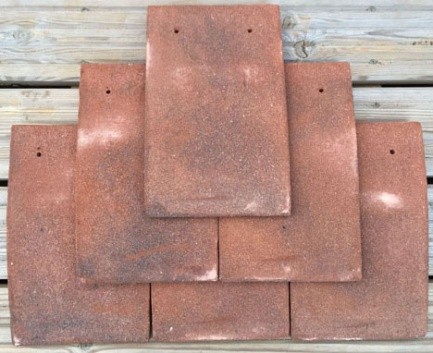
Clayhall Medium Blend - Carefully crafted to replicate all the features of handmade the Clayhall hand crafted range of tiles offers an excellent alternative when budget restrictions are a concern, but without compromising quality or durability.
Clayhall Dark Blend - Quality and durability in a budget clay roof tile. The Clayhall dark blend is sure to turn heads.
Clayhall Red Blend - A beautiful rustic clay roof tile. The Clayhall red blend is a firm favourite with our customers.
Clayhall Hamlet Mix - The Clayhall Hamlet mix is a gorgeous light and sandy looking clay roof tile that is a perennial favourite in the building trade.
Clayhall Birchwood Mix - The Clayhall Birchwood mix offers a gorgeous blend of lighter and darker shades in this diverse clay roof tile. If you are concerned that your roof tiles could look monotonous, the Clayhall Birchwood mix is the clay roof tile to choose.
The Conservation Range of roof tiles
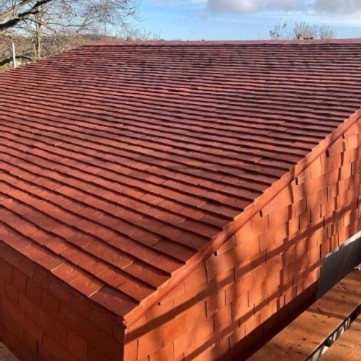
The Conservation range of roof tiles are available in a range of distinctive colours, created by using a very fine sand, The Conservation Weathered; A natural warm tone, achieving an instant mellow and settled look and The Conservation Red; perfect for vertical tiling especially suited for villages and hamlets with olde world vernacular charm.
Manufactured using high quality clay, achieving high strength and durability properties, giving homeowners and contractors peace of mind for many years to come. The conservation range comes with a complete set of associated fittings, including Hog Back Ridge, Half Round Ridge, Bonnet Hips, Valley tiles and External Angles.
The Conservation range of clay roof tiles comes in the following variations:
- Conservation Red
- Conservation Weathered
- Conservation Dark
Conservation Peg Tile
Plain clay roofing tiles laid to a double lap have been used for roof covering in England since before the Norman Conquest and tiles dating back to Roman Times have been discovered under excavation. From the outset clay plain tiles were made incorporating fixing features.
The Classic Edwardian roof tile
The Classic range of plain tiles is one of the finest ranges of clay tiles.
We source only the best raw materials for our craftsman to create beautifully handmade clay tiles of the highest quality and durability.
Tile Fittings available from Heritage Tiles
There are many fittings that are available from us a Heritage Tiles to complete your build to perfection. We stock and supply the following:
- Gable Tile
- Eave Tile
- Baby Porch Ridge
- 90 Degree Ext. Angle
- Universal Bonnet Hip
- Half Round Ridge
- Hogs Back Ridge
- Mono Ridge
- Third Round Ridge
- Universal Valley
- Ornamental Club
- Bat Tile Set
Bat Tiles:
Provide help for our bats with our range of bat friendly roof tiles.
Did you know that all UK bats and their roosts are protected by law? The Wildlife and Countryside Act introduced in 1981, gave legal protection to all bat species and their roosts in England.
Distinct species of bats prefer differing places to roost. The two most usually found species of bat in the UK are the Pipistrelle and Brown Long-Eared Bat. Pipistrelle prefer confined spaces such as under tiles on roofs and hanging spaces. The Brown Long-Eared Bat prefer roof timbers and ridges inside lofts. Heritage Clay Tiles can provide purpose made access points within your roof tiles or ridge tiles. The Bat Tile Set can form part of a mitigation package required by law for existing roosts or as potential access where a roost had not previously been present.
Select a Blend
Getting the right blend for your roofing project can feel daunting, but with our blend generator you can mix and match various blends of tiles to achieve the perfect blend.
Click here to make use of our online tool to choose your own unique blend.
Because our strict quality control provides a consistent tile size you can mix assorted styles and colours of tiles to make your roof unique to you. Please use the tool below to experiment with various blends.
Adjust the sliders to set the ingredients for your desired blend then click on the update mix button.
Alternatively click on any blend or tile to display it.
Whatever type of clay roof tile you want, Heritage Tiles will be able to help.
Bat Tiles
How bat tiles help bats survive the English winter
Winter is the most challenging time of year for bats in England. As temperatures fall and insect numbers decline, bats must conserve energy and find safe, stable places to shelter. One of the most effective ways to support bats during this critical period is through the use of bat tiles, which provide secure, long term roosting spaces within buildings.
The challenge of winter for bats in England
During winter, bats enter hibernation or periods of deep torpor to survive months with little or no food. At this time, they rely entirely on the quality of their roosts. A suitable winter roost must remain cool but stable, sheltered from wind, rain, frost, and sudden temperature changes. Any disturbance can force bats to wake, using valuable energy reserves that may not be replaced before spring.
Historically, bats found these conditions in old trees, barns, and traditional buildings. However, modern construction, renovation, and tree loss have significantly reduced the availability of these natural winter shelters.
Bat tiles as safe winter roosts
Bat tiles are specially designed building components that are integrated into roofs or walls to create discreet roosting spaces. When installed correctly, bat tiles provide bats with the dark, sheltered, and undisturbed environments they need throughout the winter months.
Unlike external bat boxes, bat tiles benefit from the insulating properties of the building itself. This helps maintain more stable internal temperatures, reducing the risk of sudden cold exposure that could be harmful during hibernation. Their fixed, built in nature also means bats are less likely to be disturbed by weather, predators, or human activity.
Energy conservation and survival with bat tiles
One of the greatest threats to bats in winter is unnecessary energy loss. Every time a bat wakes from hibernation, it uses precious fat reserves. Bat tiles support winter survival by offering quiet, secure roosts where bats can remain undisturbed for extended periods.
By providing stable conditions, bat tiles help bats conserve energy until insects reappear in spring. This directly improves survival rates and supports healthier populations year after year.
Supporting bat species with bat tiles
Bat tiles are particularly valuable because they allow buildings to play a positive role in wildlife conservation. They can be incorporated into new developments, renovations, and even rural or urban housing without affecting the building's appearance or function.
Using bat tiles shows how development and biodiversity can work together. Instead of excluding wildlife, buildings can actively support protected species during their most vulnerable season.
A practical step for winter bat conservation
Installing bat tiles is a simple yet highly effective way to help bats survive the English winter. By providing safe, insulated, and disturbance free roosting spaces, bat tiles address one of the key challenges facing bat populations today.
Promoting the use of bat tiles helps ensure that bats have the winter refuge they need to survive, recover, and continue their vital role in maintaining healthy ecosystems across England.
A little information about Suffolk
Suffolk: a county of big skies, buried kings and living legends
Suffolk has a way of seeming calm at first glance. Its lanes drift between fields, its market towns settle around greens and church towers, and its coast stretches out in long lines of shingle, marsh, and pale sky. Yet beneath that quiet surface lies one of the richest regional stories in England. Suffolk is a county where some of the earliest evidence of human life in northern Europe has been found, where Anglo-Saxon kings were buried with astonishing ceremony, and where folklore remains woven into daily conversation. Suffolk offers much more than a point on a map. It offers atmosphere, depth and a keen sense of place that can be felt in its towns, villages, estuaries, and inland landscapes alike.
Early history and lasting identity of Suffolk
The story of Suffolk begins long before counties and boundaries. Archaeological discoveries at places such as Pakefield and Hoxne have helped show that early humans lived in this landscape hundreds of thousands of years ago. Later ages left their own marks through burial mounds, earthworks and settlements, and the region became part of the wider territory associated with the Iceni during the Roman period. What makes Suffolk especially compelling, however, is the way its early medieval past still shapes its reputation today. The county formed part of the kingdom of East Anglia, and that legacy gives Suffolk an identity that feels older than its administrative map. The name of Saint Edmund still echoes through Bury St Edmunds, while Sutton Hoo near Woodbridge transformed modern understanding of Anglo-Saxon England through the discovery of its ship burial in 1939. That find did more than reveal treasure. It changed the way historians thought about power, artistry, and belief in early medieval Britain.
Suffolk's later prosperity also left a visible imprint. The county's medieval wool trade funded remarkable churches, guildhalls, and timber-framed houses, especially in places such as Lavenham, Long Melford and Clare. These settlements are not simply attractive visitor destinations; they are reminders of a period when Suffolk was tied into national and international trade. Many of the county's finest buildings were raised by merchants whose fortunes came from cloth, and that wealth can still be read in carved beams, church towers, and wide market streets. Even today, Suffolk's built environment feels unusually legible. It allows visitors and residents alike to move through layers of English history without needing to imagine hard at all.
Places that define the county of Suffolk
Few counties balance coast, countryside, and market-town heritage quite as neatly as Suffolk. Ipswich, one of England's oldest towns, brings together waterfront renewal and deep historical roots. Bury St Edmunds offers abbey ruins, gardens, and a strong connection to Saint Edmund, the East Anglian king and martyr whose cult made the town one of medieval England's great religious centres. Woodbridge combines riverside charm with close proximity to Sutton Hoo, making it one of the best gateways into Suffolk's older story. Framlingham, crowned by its impressive castle, carries the drama of power, rebellion, and royal association, while Aldeburgh brings a different kind of distinction through its seafront, arts reputation, and association with Benjamin Britten.
Along the coast, Suffolk becomes even more distinctive. Orford is a place where estuary light, seafood, military history, and folklore all meet. Nearby Orford Ness, once used for secret military and weapons research, now feels remote and haunting, with its unusual buildings and shifting shingle landscape. Southwold has a classic seaside appeal, but it is also deeply shaped by the weather and the North Sea, with a lighthouse embedded in the town and a pier that has become part of its visual identity. Dunwich offers one of Suffolk's most striking stories: a once-significant medieval port and town now largely lost to coastal erosion. Few places capture the county's fragile relationship with the sea as vividly as Dunwich, where ruined history and changing shoreline sit side by side. Inland, villages such as Kersey and Lavenham preserve scenes that seem almost theatrical in their beauty, but they remain rooted in the everyday life of the county rather than existing as museum pieces.
Folklore, mystery, and local imagination in Suffolk
No account of Suffolk feels complete without Black Shuck, the spectral black dog of East Anglian folklore. In Suffolk tradition, Black Shuck is often linked with Bungay and Blythburgh, where the story tells of a violent storm in 1577 and a terrifying apparition that entered churches, leaving death, panic, and scorch marks behind. Whether treated as omen, moral tale or ghost story, Black Shuck has become one of the county's defining legends. It survives because it fits the landscape so well: lonely roads, churchyards, marshes, and weather rolling in from the coast. Suffolk's folklore does not feel ornamental. It feels native to the place.
Other tales deepen that sense of strangeness. The wild man of Orford, supposedly caught in fishermen's nets in the twelfth century, remains one of Suffolk's oddest and most memorable stories. Silent, mysterious, and eventually gone again to the sea, he belongs to a tradition in which the Suffolk coast is not only a physical frontier but an imaginative one as well. In the west of the county, the story of the green children of Woolpit has fascinated writers and historians for centuries. The tale of two children appearing with green skin and speaking an unknown language still feels uncanny today. Then there is the Rendlesham Forest incident, a modern mystery that has given Suffolk an unexpected place in discussions of unexplained sightings and military secrecy. What links these stories is their persistence. Suffolk continues to welcome the unusual, the half-explained and the locally treasured.
Interesting facts and local character around Suffolk
Suffolk is often described as a county of big skies, and the phrase works because the landscape genuinely encourages long views. Much of the terrain is low and open, with fields, estuaries and heathland creating a sense of breadth that is both scenic and calming. The county also contains the most easterly point of the United Kingdom at Ness Point in Lowestoft. Artists have long found inspiration here, from John Constable in the Stour Valley to later writers, musicians and photographers drawn to the county's changing light. Suffolk is also known for its churches, sometimes called the 'cathedrals of the marshes' because of their size and prominence in the landscape. Food adds another layer of local identity, with seafood on the coast, market produce inland and long traditions of farming shaping both the economy and the culture.
Suffolk stands out because it offers more than scenery and more than heritage taken separately. It is a county where historical significance, folklore, natural beauty, and local distinctiveness all reinforce one another. Visitors can move from abbey ruins to medieval lanes, from coastal shingle to royal burial ground, from market-town tradition to ghost story in a single day. That range gives Suffolk unusual depth and broad appeal. It is peaceful without being dull, historic without feeling frozen, and familiar enough to be welcoming while still holding onto its own mysteries. For anyone seeking a location with character, authenticity and layers of story, Suffolk is exceptionally well placed.
Products available from Heritage Clay Tiles Ltd in East Sussex
Clay Roof Tiles in East Sussex
Clayhall Roof Tiles in East Sussex
Conservation Peg Tiles in East Sussex
Conservation Roof Tiles in East Sussex
Edwardian Roof Tiles in East Sussex
Georgian Roof Tiles in East Sussex
Handmade Clay Tiles in East Sussex
Handmade Roof Tiles in East Sussex
High Quality Roof Tiles in East Sussex
Traditional Clay Tiles in East Sussex
Traditional Roof Tiles in East Sussex
Victorian Roof Tiles in East Sussex
Products available from Heritage Clay Tiles Ltd in Essex
Conservation Peg Tiles in Essex
Conservation Roof Tiles in Essex
High Quality Roof Tiles in Essex
Traditional Clay Tiles in Essex
Traditional Roof Tiles in Essex
Products available from Heritage Clay Tiles Ltd in Hampshire
Clayhall Roof Tiles in Hampshire
Conservation Peg Tiles in Hampshire
Conservation Roof Tiles in Hampshire
Edwardian Roof Tiles in Hampshire
Georgian Roof Tiles in Hampshire
Handmade Clay Tiles in Hampshire
Handmade Roof Tiles in Hampshire
High Quality Roof Tiles in Hampshire
Traditional Clay Tiles in Hampshire
Traditional Roof Tiles in Hampshire
Victorian Roof Tiles in Hampshire
Products available from Heritage Clay Tiles Ltd in Hertfordshire
Clay Roof Tiles in Hertfordshire
Clayhall Roof Tiles in Hertfordshire
Conservation Peg Tiles in Hertfordshire
Conservation Roof Tiles in Hertfordshire
Edwardian Roof Tiles in Hertfordshire
Georgian Roof Tiles in Hertfordshire
Handmade Clay Tiles in Hertfordshire
Handmade Roof Tiles in Hertfordshire
High Quality Roof Tiles in Hertfordshire
Traditional Clay Tiles in Hertfordshire
Traditional Roof Tiles in Hertfordshire
Victorian Roof Tiles in Hertfordshire
Products available from Heritage Clay Tiles Ltd in Kent
Conservation Peg Tiles in Kent
Conservation Roof Tiles in Kent
High Quality Roof Tiles in Kent
Traditional Clay Tiles in Kent
Traditional Roof Tiles in Kent
Products available from Heritage Clay Tiles Ltd in London
Conservation Peg Tiles in London
Conservation Roof Tiles in London
Edwardian Roof Tiles in London
High Quality Roof Tiles in London
Traditional Clay Tiles in London
Traditional Roof Tiles in London
Victorian Roof Tiles in London
Products available from Heritage Clay Tiles Ltd in Surrey
Conservation Peg Tiles in Surrey
Conservation Roof Tiles in Surrey
Edwardian Roof Tiles in Surrey
High Quality Roof Tiles in Surrey
Traditional Clay Tiles in Surrey
Traditional Roof Tiles in Surrey
Victorian Roof Tiles in Surrey
Products available from Heritage Clay Tiles Ltd in West Sussex
Clay Roof Tiles in West Sussex
Clayhall Roof Tiles in West Sussex
Conservation Peg Tiles in West Sussex
Conservation Roof Tiles in West Sussex
Edwardian Roof Tiles in West Sussex
Georgian Roof Tiles in West Sussex
Handmade Clay Tiles in West Sussex
Handmade Roof Tiles in West Sussex
High Quality Roof Tiles in West Sussex
Traditional Clay Tiles in West Sussex
Traditional Roof Tiles in West Sussex
Victorian Roof Tiles in West Sussex
Products available from Heritage Clay Tiles Ltd in Bedfordshire
Clay Roof Tiles in Bedfordshire
Clayhall Roof Tiles in Bedfordshire
Conservation Peg Tiles in Bedfordshire
Conservation Roof Tiles in Bedfordshire
Edwardian Roof Tiles in Bedfordshire
Georgian Roof Tiles in Bedfordshire
Handmade Clay Tiles in Bedfordshire
Handmade Roof Tiles in Bedfordshire
High Quality Roof Tiles in Bedfordshire
Traditional Clay Tiles in Bedfordshire
Products available from Heritage Clay Tiles Ltd in Berkshire
Clayhall Roof Tiles in Berkshire
Conservation Peg Tiles in Berkshire
Conservation Roof Tiles in Berkshire
Edwardian Roof Tiles in Berkshire
Georgian Roof Tiles in Berkshire
Handmade Clay Tiles in Berkshire
Handmade Roof Tiles in Berkshire
High Quality Roof Tiles in Berkshire
Traditional Clay Tiles in Berkshire
Products available from Heritage Clay Tiles Ltd in Buckinghamshire
Clay Roof Tiles in Buckinghamshire
Clayhall Roof Tiles in Buckinghamshire
Conservation Peg Tiles in Buckinghamshire
Conservation Roof Tiles in Buckinghamshire
Edwardian Roof Tiles in Buckinghamshire
Georgian Roof Tiles in Buckinghamshire
Handmade Clay Tiles in Buckinghamshire
Handmade Roof Tiles in Buckinghamshire
High Quality Roof Tiles in Buckinghamshire
Traditional Clay Tiles in Buckinghamshire
Products available from Heritage Clay Tiles Ltd in Cambridgeshire
Clay Roof Tiles in Cambridgeshire
Clayhall Roof Tiles in Cambridgeshire
Conservation Peg Tiles in Cambridgeshire
Conservation Roof Tiles in Cambridgeshire
Edwardian Roof Tiles in Cambridgeshire
Georgian Roof Tiles in Cambridgeshire
Handmade Clay Tiles in Cambridgeshire
Handmade Roof Tiles in Cambridgeshire
High Quality Roof Tiles in Cambridgeshire
Traditional Clay Tiles in Cambridgeshire
Traditional Roof Tiles in Cambridgeshire
Victorian Roof Tiles in Cambridgeshire
Products available from Heritage Clay Tiles Ltd in Oxfordshire
Clay Roof Tiles in Oxfordshire
Clayhall Roof Tiles in Oxfordshire
Conservation Peg Tiles in Oxfordshire
Conservation Roof Tiles in Oxfordshire
Edwardian Roof Tiles in Oxfordshire
Georgian Roof Tiles in Oxfordshire
Handmade Clay Tiles in Oxfordshire
Handmade Roof Tiles in Oxfordshire
High Quality Roof Tiles in Oxfordshire
Traditional Clay Tiles in Oxfordshire
Products available from Heritage Clay Tiles Ltd in Suffolk
Clayhall Roof Tiles in Suffolk
Conservation Peg Tiles in Suffolk
Conservation Roof Tiles in Suffolk
Edwardian Roof Tiles in Suffolk
Georgian Roof Tiles in Suffolk
Handmade Clay Tiles in Suffolk
Handmade Roof Tiles in Suffolk
High Quality Roof Tiles in Suffolk
Traditional Clay Tiles in Suffolk
Traditional Roof Tiles in Suffolk
Victorian Roof Tiles in Suffolk
Further Information
If you would like to know more or are interested in a quote we would be happy to help. Phone us on 01634 471 344, email us at sales@heritagetiles.co.uk and we will be in touch as soon as possible.