
Bat Tiles in Cambridgeshire
Heritage Tiles: Emblematic of the finest craftsmanship
Heritage tiles are the professional roofer's choice for the highest quality clay roof tiles. We pride ourselves in manufacturing, stocking, and delivering the very finest in prestige clay roof tiles.
Heritage Tiles have several tile ranges that satisfy every architectural requirement. Vintage and historic properties right up to modern new builds are covered by the diverse range of clay roof tiles that we stock.
So, whether you are in the building trade, or simply wish to choose your own tiles, Heritage Tiles have the right product for your specific requirements.
What Heritage Tiles have to offer our customers?
- We offer specification and technical solutions to help you achieve the perfect build.
- We also offer expert design advice to all our customers.
- We are happy to engage in site visits with our clients.
- We have stockists and distributors throughout the United Kingdom to ensure that we can provide our expert service to a wider area.
- We can provide estimated quantities from plans supplied by our clients.
- We offer battening plans.
- We can deliver a standard and bespoke colour choice for our clay tile products.
- All our tiles are assessed and approved by Lucideon.
- We provide a nationwide delivery and collection service.
The ranges of clay roof tiles we supply.
The Clayhall Range of roof tiles:
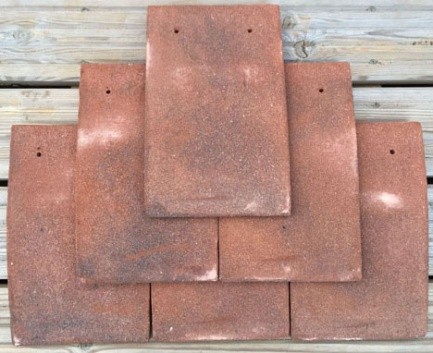
Clayhall Medium Blend - Carefully crafted to replicate all the features of handmade the Clayhall hand crafted range of tiles offers an excellent alternative when budget restrictions are a concern, but without compromising quality or durability.
Clayhall Dark Blend - Quality and durability in a budget clay roof tile. The Clayhall dark blend is sure to turn heads.
Clayhall Red Blend - A beautiful rustic clay roof tile. The Clayhall red blend is a firm favourite with our customers.
Clayhall Hamlet Mix - The Clayhall Hamlet mix is a gorgeous light and sandy looking clay roof tile that is a perennial favourite in the building trade.
Clayhall Birchwood Mix - The Clayhall Birchwood mix offers a gorgeous blend of lighter and darker shades in this diverse clay roof tile. If you are concerned that your roof tiles could look monotonous, the Clayhall Birchwood mix is the clay roof tile to choose.
The Conservation Range of roof tiles
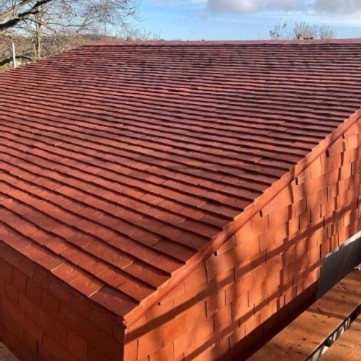
The Conservation range of roof tiles are available in a range of distinctive colours, created by using a very fine sand, The Conservation Weathered; A natural warm tone, achieving an instant mellow and settled look and The Conservation Red; perfect for vertical tiling especially suited for villages and hamlets with olde world vernacular charm.
Manufactured using high quality clay, achieving high strength and durability properties, giving homeowners and contractors peace of mind for many years to come. The conservation range comes with a complete set of associated fittings, including Hog Back Ridge, Half Round Ridge, Bonnet Hips, Valley tiles and External Angles.
The Conservation range of clay roof tiles comes in the following variations:
- Conservation Red
- Conservation Weathered
- Conservation Dark
Conservation Peg Tile
Plain clay roofing tiles laid to a double lap have been used for roof covering in England since before the Norman Conquest and tiles dating back to Roman Times have been discovered under excavation. From the outset clay plain tiles were made incorporating fixing features.
The Classic Edwardian roof tile
The Classic range of plain tiles is one of the finest ranges of clay tiles.
We source only the best raw materials for our craftsman to create beautifully handmade clay tiles of the highest quality and durability.
Tile Fittings available from Heritage Tiles
There are many fittings that are available from us a Heritage Tiles to complete your build to perfection. We stock and supply the following:
- Gable Tile
- Eave Tile
- Baby Porch Ridge
- 90 Degree Ext. Angle
- Universal Bonnet Hip
- Half Round Ridge
- Hogs Back Ridge
- Mono Ridge
- Third Round Ridge
- Universal Valley
- Ornamental Club
- Bat Tile Set
Bat Tiles:
Provide help for our bats with our range of bat friendly roof tiles.
Did you know that all UK bats and their roosts are protected by law? The Wildlife and Countryside Act introduced in 1981, gave legal protection to all bat species and their roosts in England.
Distinct species of bats prefer differing places to roost. The two most usually found species of bat in the UK are the Pipistrelle and Brown Long-Eared Bat. Pipistrelle prefer confined spaces such as under tiles on roofs and hanging spaces. The Brown Long-Eared Bat prefer roof timbers and ridges inside lofts. Heritage Clay Tiles can provide purpose made access points within your roof tiles or ridge tiles. The Bat Tile Set can form part of a mitigation package required by law for existing roosts or as potential access where a roost had not previously been present.
Select a Blend
Getting the right blend for your roofing project can feel daunting, but with our blend generator you can mix and match various blends of tiles to achieve the perfect blend.
Click here to make use of our online tool to choose your own unique blend.
Because our strict quality control provides a consistent tile size you can mix assorted styles and colours of tiles to make your roof unique to you. Please use the tool below to experiment with various blends.
Adjust the sliders to set the ingredients for your desired blend then click on the update mix button.
Alternatively click on any blend or tile to display it.
Whatever type of clay roof tile you want, Heritage Tiles will be able to help.
Bat Tiles
Supporting bat species through the use of bat tiles
Bats play a vital role in healthy ecosystems, particularly through their consumption of night flying insects. By feeding on large numbers of insects such as mosquitoes, moths, beetles, and flies, bats contribute significantly to natural pest control and help maintain ecological balance. As pressures on bat populations increase, practical conservation measures, such as the use of bat tiles, are becoming increasingly important.
Bats matter, so do bat tiles
Bats are highly effective insect predators. Their nocturnal feeding habits target insects that are often agricultural pests or nuisance species to humans. Mosquitoes, moths, beetles, flies, and other small insects form a large part of their diet, and this feeding activity helps regulate insect populations naturally. By reducing pest numbers, bats indirectly support farming and reduce reliance on chemical pesticides.
Despite their importance, many bat species face challenges including habitat loss, reduced roosting opportunities, and changes to land use. Modern buildings, while efficient for humans, often lack the small gaps and sheltered spaces bats traditionally used for roosting.
Bat tiles as a conservation tool
Bat tiles offer a practical way to address the loss of natural and traditional roosting sites. Integrated into buildings, bat tiles are designed to provide safe, durable roosting spaces that mimic the crevices bats naturally seek. By incorporating bat tiles into new developments or renovations, it is possible to support bat populations without disrupting human use of buildings.
Providing suitable roosting spaces is especially important for insect eating bats, as secure daytime shelters allow them to conserve energy and remain close to feeding areas. When bats have stable roosts, they are better able to continue their role as natural pest controllers, benefiting both ecosystems and surrounding agricultural landscapes.
Environmental and agricultural benefits of bat tile usage
Encouraging bats through the use of bat tiles has benefits that extend beyond conservation alone. Healthy bat populations help suppress insect numbers in a natural and sustainable way. This ecological service supports crop protection and contributes to reduced chemical pesticide use, aligning with broader environmental and sustainability goals.
Bat tiles also help raise awareness of biodiversity in the built environment. Their use demonstrates how buildings can be designed or adapted to coexist with wildlife, showing that conservation does not have to be separate from development.
A slight change with a lasting impact with bat tiles
Incorporating bat tiles into buildings is a simple but meaningful step toward supporting bat species. By providing safe roosting spaces, bat tiles help ensure that bats can continue to thrive and perform their essential role in controlling insect populations. Protecting bats ultimately protects ecosystems, agriculture, and the natural balance that benefits both wildlife and people.
A little information about Cambridgeshire
Cambridgeshire: colleges, cathedral skies, and fenland stories
Cambridgeshire is often introduced through the global reputation of Cambridge, yet the county is far broader and more varied than its famous university city alone. This is a landscape of waterways, market towns, cathedral towers, drained fens, and chalk hills, where scholarship and agriculture sit side by side and where old legends survive in surprisingly vivid form. Cambridgeshire offers unusual range. It can be historic and innovative at the same time, shaped by monastic power, Civil War politics, engineering ambition, and centuries of rural labour. The county feels open and spacious, particularly in the fenland north, but it also holds tightly packed layers of history in places such as Ely, Huntingdon, St Ives, and the villages around the Gog Magog Hills. What gives Cambridgeshire its lasting appeal is this blend of intellectual prestige, practical landscape, and local story.
Cambridgeshire: From marshland edge to centre of learning
Cambridgeshire's history is inseparable from water. Much of the county developed around the fen edge, where slightly higher ground offered settlement, cultivation, and routes through what was once a far wetter and more uncertain environment. The Fens themselves were for centuries a world of reed beds, shallow water, fish, birds, and isolated communities living on islands of firmer land. Ely was one of those islands, and its name is strongly associated with eels, a reminder of how central wetland resources once were to everyday life. Religious foundations gave the county some of its earliest enduring centres of power, most notably Ely, whose monastic and later cathedral status helped shape the wider region. Cambridge also emerged early as a strategic river crossing and trading place, and over time that practical importance developed into something much larger with the growth of the university from the thirteenth century onward.
The county's later story is one of adaptation and ambition. The draining of the Fens transformed large areas of Cambridgeshire in stages, especially from the seventeenth century onward, turning marsh into highly productive agricultural land while also altering older ways of life. This engineering achievement created one of the most distinctive landscapes in England: broad, level fields cut by straight drains, dykes, and waterways. Meanwhile Cambridge became a centre not only of learning but of influence, associated over the centuries with scholarship, theology, science, and political debate. Elsewhere, market towns such as Huntingdon, Wisbech, March and St Neots connected farming districts with trade and transport, while the Isle of Ely retained a character all its own. Cambridgeshire therefore developed through both grand institutions and practical labour, which is one reason it still feels so grounded despite its international reputation.
Places that give Cambridgeshire its distinct character
Cambridge is the obvious starting point, but even here the county has more to offer than postcard images of colleges and punts. The city's great institutions, including the college courts, chapels and libraries along the River Cam, create one of England's most recognisable urban environments. Yet Cambridge also opens out into commons, village approaches and low hills that quickly remind visitors they are in a wider rural county. Ely provides a different kind of drama. Rising above the fenland, Ely Cathedral has long been known as the 'ship of the fens' because of the way it dominates the flat surrounding landscape. The city's riverside, independent streets and historical associations with Saint Etheldreda and Oliver Cromwell give it a depth that feels separate from Cambridge, even while both places share intellectual and ecclesiastical weight.
Beyond the two cities, Cambridgeshire becomes wonderfully varied. St Ives and St Neots bring river life, bridges, and old market-town energy. Huntingdon is closely tied to the memory of Oliver Cromwell and has a strong historic core that speaks to the county's role in national politics. Wisbech, often called the capital of the Fens, surprises many visitors with its Georgian elegance and broad streets. March, Ramsey and Whittlesey reflect the practical strengths of fenland settlement, where trade, drainage and agriculture have long shaped local identity. Important sites outside the main towns add further depth. Wicken Fen offers one of the best surviving glimpses of ancient wetland habitat, while Wimpole Estate combines house, parkland, and farming history. Duxford brings modern military heritage into the county story, showing that Cambridgeshire's significance extends well beyond medieval stone and academic tradition.
Folklore among the hills, dykes, and waters of Cambridgeshire
Cambridgeshire folklore often feels inseparable from the landscape. The Gog Magog Hills south of Cambridge carry some of the county's best-known legends, with stories of giants said to have shaped the land or lain sleeping beneath it. In a county otherwise famous for flat fenland, the hills already stand out physically, which helps explain why they drew so much mythology around them. Older references to giant figures cut into the hillside and local tales about Gog and Magog have given the area a folkloric importance that far outweighs its modest height. Devil's Dyke, the great earthwork near the county border, adds another layer of mystery. Its scale has long inspired speculation, and folklore turned this ancient boundary into a place of ghost stories, supernatural associations, and local wonder.
The fen country has its own imaginative pull. Old waterways, mists, and isolated settlements have encouraged stories of ghostly apparitions, uncanny sounds and strange creatures glimpsed across the reeds or along the drains. Cambridgeshire tradition also includes the tale of the phantom black dog in certain localities, fitting into a wider East Anglian pattern of ominous roadside legends. Around Ely and the old Isle landscapes, saints' stories mingle with miracle tales and memories of resistance, especially those connected to Hereward the Wake and the difficult wetland terrain that helped rebels hold out against Norman power. What makes Cambridgeshire folklore distinctive is that it does not merely decorate the county. It grows naturally from chalk ridge, fen water, causeway, and church tower, giving the landscape a second life in story.
Interesting facts and local identity of Cambridgeshire
Cambridgeshire contains some of the most distinctive lowland scenery in Britain. Holme Fen includes the lowest point of dry land in the United Kingdom, a fact that reflects the dramatic environmental changes brought about by fen drainage and peat shrinkage. Ely Cathedral's octagon is architecturally famous, while Cambridge's university buildings have shaped global ideas of English scholarship for centuries. The county also played a role in the development of modern football through Parker's Piece in Cambridge, where influential rules were codified in the nineteenth century. Agriculture remains central to the county's identity, with rich soils supporting large-scale farming, orchards, and horticulture, while rivers and drains still define everyday movement and view. These contrasts make Cambridgeshire memorable: intellectually celebrated, agriculturally productive, visually open, and historically layered in ways that are hard to confuse with anywhere else in England.
Cambridgeshire stands out because it offers more than one clear identity without feeling fragmented. It is a county of colleges and cathedral views, but also of fenland labour, engineering change, river settlements, and persistent legend. Visitors can move from the courts of Cambridge to the open skies of the Fens, from Ely's great church to quiet waterside towns and prehistoric earthworks, all within a relatively short journey. That breadth gives Cambridgeshire unusual strength. It is intellectually famous, locally distinctive, and deeply rooted in both landscape and story, which makes it an exceptionally popular county to visit.
Products available from Heritage Clay Tiles Ltd in East Sussex
Clay Roof Tiles in East Sussex
Clayhall Roof Tiles in East Sussex
Conservation Peg Tiles in East Sussex
Conservation Roof Tiles in East Sussex
Edwardian Roof Tiles in East Sussex
Georgian Roof Tiles in East Sussex
Handmade Clay Tiles in East Sussex
Handmade Roof Tiles in East Sussex
High Quality Roof Tiles in East Sussex
Traditional Clay Tiles in East Sussex
Traditional Roof Tiles in East Sussex
Victorian Roof Tiles in East Sussex
Products available from Heritage Clay Tiles Ltd in Essex
Conservation Peg Tiles in Essex
Conservation Roof Tiles in Essex
High Quality Roof Tiles in Essex
Traditional Clay Tiles in Essex
Traditional Roof Tiles in Essex
Products available from Heritage Clay Tiles Ltd in Hampshire
Clayhall Roof Tiles in Hampshire
Conservation Peg Tiles in Hampshire
Conservation Roof Tiles in Hampshire
Edwardian Roof Tiles in Hampshire
Georgian Roof Tiles in Hampshire
Handmade Clay Tiles in Hampshire
Handmade Roof Tiles in Hampshire
High Quality Roof Tiles in Hampshire
Traditional Clay Tiles in Hampshire
Traditional Roof Tiles in Hampshire
Victorian Roof Tiles in Hampshire
Products available from Heritage Clay Tiles Ltd in Hertfordshire
Clay Roof Tiles in Hertfordshire
Clayhall Roof Tiles in Hertfordshire
Conservation Peg Tiles in Hertfordshire
Conservation Roof Tiles in Hertfordshire
Edwardian Roof Tiles in Hertfordshire
Georgian Roof Tiles in Hertfordshire
Handmade Clay Tiles in Hertfordshire
Handmade Roof Tiles in Hertfordshire
High Quality Roof Tiles in Hertfordshire
Traditional Clay Tiles in Hertfordshire
Traditional Roof Tiles in Hertfordshire
Victorian Roof Tiles in Hertfordshire
Products available from Heritage Clay Tiles Ltd in Kent
Conservation Peg Tiles in Kent
Conservation Roof Tiles in Kent
High Quality Roof Tiles in Kent
Traditional Clay Tiles in Kent
Traditional Roof Tiles in Kent
Products available from Heritage Clay Tiles Ltd in London
Conservation Peg Tiles in London
Conservation Roof Tiles in London
Edwardian Roof Tiles in London
High Quality Roof Tiles in London
Traditional Clay Tiles in London
Traditional Roof Tiles in London
Victorian Roof Tiles in London
Products available from Heritage Clay Tiles Ltd in Surrey
Conservation Peg Tiles in Surrey
Conservation Roof Tiles in Surrey
Edwardian Roof Tiles in Surrey
High Quality Roof Tiles in Surrey
Traditional Clay Tiles in Surrey
Traditional Roof Tiles in Surrey
Victorian Roof Tiles in Surrey
Products available from Heritage Clay Tiles Ltd in West Sussex
Clay Roof Tiles in West Sussex
Clayhall Roof Tiles in West Sussex
Conservation Peg Tiles in West Sussex
Conservation Roof Tiles in West Sussex
Edwardian Roof Tiles in West Sussex
Georgian Roof Tiles in West Sussex
Handmade Clay Tiles in West Sussex
Handmade Roof Tiles in West Sussex
High Quality Roof Tiles in West Sussex
Traditional Clay Tiles in West Sussex
Traditional Roof Tiles in West Sussex
Victorian Roof Tiles in West Sussex
Products available from Heritage Clay Tiles Ltd in Bedfordshire
Clay Roof Tiles in Bedfordshire
Clayhall Roof Tiles in Bedfordshire
Conservation Peg Tiles in Bedfordshire
Conservation Roof Tiles in Bedfordshire
Edwardian Roof Tiles in Bedfordshire
Georgian Roof Tiles in Bedfordshire
Handmade Clay Tiles in Bedfordshire
Handmade Roof Tiles in Bedfordshire
High Quality Roof Tiles in Bedfordshire
Traditional Clay Tiles in Bedfordshire
Products available from Heritage Clay Tiles Ltd in Berkshire
Clayhall Roof Tiles in Berkshire
Conservation Peg Tiles in Berkshire
Conservation Roof Tiles in Berkshire
Edwardian Roof Tiles in Berkshire
Georgian Roof Tiles in Berkshire
Handmade Clay Tiles in Berkshire
Handmade Roof Tiles in Berkshire
High Quality Roof Tiles in Berkshire
Traditional Clay Tiles in Berkshire
Products available from Heritage Clay Tiles Ltd in Buckinghamshire
Clay Roof Tiles in Buckinghamshire
Clayhall Roof Tiles in Buckinghamshire
Conservation Peg Tiles in Buckinghamshire
Conservation Roof Tiles in Buckinghamshire
Edwardian Roof Tiles in Buckinghamshire
Georgian Roof Tiles in Buckinghamshire
Handmade Clay Tiles in Buckinghamshire
Handmade Roof Tiles in Buckinghamshire
High Quality Roof Tiles in Buckinghamshire
Traditional Clay Tiles in Buckinghamshire
Products available from Heritage Clay Tiles Ltd in Cambridgeshire
Clay Roof Tiles in Cambridgeshire
Clayhall Roof Tiles in Cambridgeshire
Conservation Peg Tiles in Cambridgeshire
Conservation Roof Tiles in Cambridgeshire
Edwardian Roof Tiles in Cambridgeshire
Georgian Roof Tiles in Cambridgeshire
Handmade Clay Tiles in Cambridgeshire
Handmade Roof Tiles in Cambridgeshire
High Quality Roof Tiles in Cambridgeshire
Traditional Clay Tiles in Cambridgeshire
Traditional Roof Tiles in Cambridgeshire
Victorian Roof Tiles in Cambridgeshire
Products available from Heritage Clay Tiles Ltd in Oxfordshire
Clay Roof Tiles in Oxfordshire
Clayhall Roof Tiles in Oxfordshire
Conservation Peg Tiles in Oxfordshire
Conservation Roof Tiles in Oxfordshire
Edwardian Roof Tiles in Oxfordshire
Georgian Roof Tiles in Oxfordshire
Handmade Clay Tiles in Oxfordshire
Handmade Roof Tiles in Oxfordshire
High Quality Roof Tiles in Oxfordshire
Traditional Clay Tiles in Oxfordshire
Products available from Heritage Clay Tiles Ltd in Suffolk
Clayhall Roof Tiles in Suffolk
Conservation Peg Tiles in Suffolk
Conservation Roof Tiles in Suffolk
Edwardian Roof Tiles in Suffolk
Georgian Roof Tiles in Suffolk
Handmade Clay Tiles in Suffolk
Handmade Roof Tiles in Suffolk
High Quality Roof Tiles in Suffolk
Traditional Clay Tiles in Suffolk
Traditional Roof Tiles in Suffolk
Victorian Roof Tiles in Suffolk
Further Information
If you would like to know more or are interested in a quote we would be happy to help. Phone us on 01634 471 344, email us at sales@heritagetiles.co.uk and we will be in touch as soon as possible.