
Clay Roof Tiles in Oxfordshire
Heritage Tiles: Emblematic of the finest craftsmanship
Heritage tiles are the professional roofer's choice for the highest quality clay roof tiles. We pride ourselves in manufacturing, stocking, and delivering the very finest in prestige clay roof tiles.
Heritage Tiles have several tile ranges that satisfy every architectural requirement. Vintage and historic properties right up to modern new builds are covered by the diverse range of clay roof tiles that we stock.
So, whether you are in the building trade, or simply wish to choose your own tiles, Heritage Tiles have the right product for your specific requirements.
What Heritage Tiles have to offer our customers?
- We offer specification and technical solutions to help you achieve the perfect build.
- We also offer expert design advice to all our customers.
- We are happy to engage in site visits with our clients.
- We have stockists and distributors throughout the United Kingdom to ensure that we can provide our expert service to a wider area.
- We can provide estimated quantities from plans supplied by our clients.
- We offer battening plans.
- We can deliver a standard and bespoke colour choice for our clay tile products.
- All our tiles are assessed and approved by Lucideon.
- We provide a nationwide delivery and collection service.
The ranges of clay roof tiles we supply.
The Clayhall Range of roof tiles:
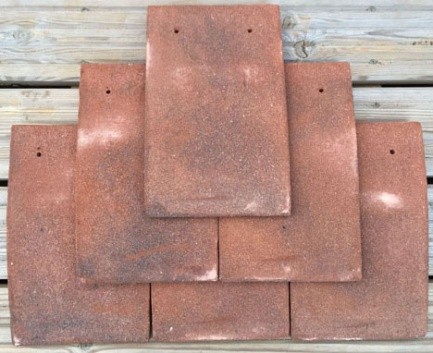
Clayhall Medium Blend - Carefully crafted to replicate all the features of handmade the Clayhall hand crafted range of tiles offers an excellent alternative when budget restrictions are a concern, but without compromising quality or durability.
Clayhall Dark Blend - Quality and durability in a budget clay roof tile. The Clayhall dark blend is sure to turn heads.
Clayhall Red Blend - A beautiful rustic clay roof tile. The Clayhall red blend is a firm favourite with our customers.
Clayhall Hamlet Mix - The Clayhall Hamlet mix is a gorgeous light and sandy looking clay roof tile that is a perennial favourite in the building trade.
Clayhall Birchwood Mix - The Clayhall Birchwood mix offers a gorgeous blend of lighter and darker shades in this diverse clay roof tile. If you are concerned that your roof tiles could look monotonous, the Clayhall Birchwood mix is the clay roof tile to choose.
The Conservation Range of roof tiles
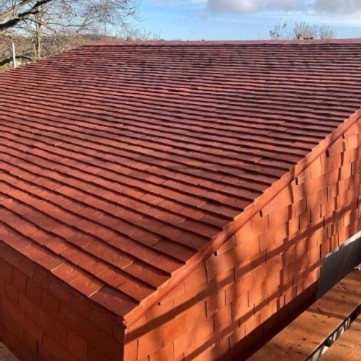
The Conservation range of roof tiles are available in a range of distinctive colours, created by using a very fine sand, The Conservation Weathered; A natural warm tone, achieving an instant mellow and settled look and The Conservation Red; perfect for vertical tiling especially suited for villages and hamlets with olde world vernacular charm.
Manufactured using high quality clay, achieving high strength and durability properties, giving homeowners and contractors peace of mind for many years to come. The conservation range comes with a complete set of associated fittings, including Hog Back Ridge, Half Round Ridge, Bonnet Hips, Valley tiles and External Angles.
The Conservation range of clay roof tiles comes in the following variations:
- Conservation Red
- Conservation Weathered
- Conservation Dark
Conservation Peg Tile
Plain clay roofing tiles laid to a double lap have been used for roof covering in England since before the Norman Conquest and tiles dating back to Roman Times have been discovered under excavation. From the outset clay plain tiles were made incorporating fixing features.
The Classic Edwardian roof tile
The Classic range of plain tiles is one of the finest ranges of clay tiles.
We source only the best raw materials for our craftsman to create beautifully handmade clay tiles of the highest quality and durability.
Tile Fittings available from Heritage Tiles
There are many fittings that are available from us a Heritage Tiles to complete your build to perfection. We stock and supply the following:
- Gable Tile
- Eave Tile
- Baby Porch Ridge
- 90 Degree Ext. Angle
- Universal Bonnet Hip
- Half Round Ridge
- Hogs Back Ridge
- Mono Ridge
- Third Round Ridge
- Universal Valley
- Ornamental Club
- Bat Tile Set
Bat Tiles:
Provide help for our bats with our range of bat friendly roof tiles.
Did you know that all UK bats and their roosts are protected by law? The Wildlife and Countryside Act introduced in 1981, gave legal protection to all bat species and their roosts in England.
Distinct species of bats prefer differing places to roost. The two most usually found species of bat in the UK are the Pipistrelle and Brown Long-Eared Bat. Pipistrelle prefer confined spaces such as under tiles on roofs and hanging spaces. The Brown Long-Eared Bat prefer roof timbers and ridges inside lofts. Heritage Clay Tiles can provide purpose made access points within your roof tiles or ridge tiles. The Bat Tile Set can form part of a mitigation package required by law for existing roosts or as potential access where a roost had not previously been present.
Select a Blend
Getting the right blend for your roofing project can feel daunting, but with our blend generator you can mix and match various blends of tiles to achieve the perfect blend.
Click here to make use of our online tool to choose your own unique blend.
Because our strict quality control provides a consistent tile size you can mix assorted styles and colours of tiles to make your roof unique to you. Please use the tool below to experiment with various blends.
Adjust the sliders to set the ingredients for your desired blend then click on the update mix button.
Alternatively click on any blend or tile to display it.
Whatever type of clay roof tile you want, Heritage Tiles will be able to help.
Clay Roof Tiles
History of clay roof tiles
Clay tiles have been used on many buildings since around 2700 BC and were first introduced into England by the Romans when they invaded. Clay roof tiles have become an integral part of our architectural heritage and even today, they remain a standard tile for the roofing industry.
When we think of clay roof tiles, we probably picture a country hamlet of quaint cottages, but the use of clay roof tiles is far more widespread throughout the country.
For many hundreds of years, clay roof tiles have been used for the roofing of properties throughout the world. Why? Because they are safer and far more durable than the alternatives.
Like so many other things we take for granted today, we owe the Romans a debt of gratitude for their innovation and the clay roof tile. The Romans employed an over and under structure, with a flat tray with curved sides in their clay roof tiles. These would be laid against the roof while a cylindrical tile was overlaid to cover the joints and create a waterproof roof.
As good as the Roman clay roof tiles were, when they left our shores, the practice of clay roof tile manufacture virtually died out. We replaced the clay roof tile with the thatched roof and this was to become the standard on homes and buildings throughout England for the next four centuries years.
The humble clay roof tile would not be seen again in great numbers in England until the 13th century. The clay tiles used then were not like the Roman tiles, they were far simpler in design. The typically English clay roof tile was flat, rectangular and was named the peg tile. These peg clay roof tiles had small holes at the edge into which pegs were inserted to hold them in place. They were laid in an overlapping fashion flat to the roof structure.
A catastrophic fire saw clay roof tiles introduced once again
Following the Great Fire of Southwark in 1212, it was ordered that buildings in the city adopt clay roof tiles as they presented less of a fire risk. Similarly, in light of the fire and potential risk that thatched roofs presented in a built up area, the Archbishop of Canterbury ordered all buildings in the vicinity of the church to have their roofs clad in clay roof tiles from that day onward. These decrees meant that the use of clay tiles across the country was to become almost mandatory. King Edward IV even decided to standardise the size of the clay roof tiles and made this law in 1477.
In the years that followed, the distinctive red and orange tiled roof would become the main feature of British architecture.
Fast forward to the twenty first century, the clay roof tile remains the standard tile for the roofing industry. Design and technology has seen improvements to their efficiency and installation, but much of their appeal, durability and aesthetic charm, owing to the many colours and textures, has continued to see the clay roof tile as the go to roofing material of choice by so many.
A little information about Oxfordshire
Oxford in Oxfordshire
Oxford is a city and is the county town and only city in all of Oxfordshire. The famous Oxfordshire city is 56 miles north-west of London, 64 miles south-east of Birmingham and 61 miles north-east of Bristol. The Oxfordshire city is home to the University of Oxford, the oldest university in the English-speaking world; it has buildings in every style of English architecture since late Anglo-Saxon.
History of Oxford, Oxfordshire
The history of Oxford in Oxfordshire dates back to its original settlement in the Saxon period. Originally of strategic significance due to its controlling location on the upper reaches of the River Thames at its junction with the River Cherwell, the Oxfordshire town grew in national importance during the early Norman period, and in the late 12th century became home to the newly established University of Oxford. The Oxfordshire city was besieged during The Anarchy in 1142.
The famed Oxfordshire University rose to dominate the town of Oxford. A heavily ecclesiastical town, Oxford was greatly affected by the changes of the English Reformation that were ordered by Henry VIII, emerging as the seat of a bishopric and a full-fledged city. During the English Civil War, Oxford housed the court of Charles I and stood at the heart of national affairs.
The Oxfordshire city began to grow industrially during the 19th century, and had an industrial boom in the early 20th century, with major printing and car-manufacturing industries. These declined, along with other British heavy industry, in the 1970s and 1980s, leaving behind a city which had developed far beyond the university town of the past.
The architecture in the Oxfordshire city is quite impressive, with gothic and Victorian buildings and modern ones nestled side by side.
Products available from Heritage Clay Tiles Ltd in East Sussex
Clay Roof Tiles in East Sussex
Clayhall Roof Tiles in East Sussex
Conservation Peg Tiles in East Sussex
Conservation Roof Tiles in East Sussex
Edwardian Roof Tiles in East Sussex
Georgian Roof Tiles in East Sussex
Handmade Clay Tiles in East Sussex
Handmade Roof Tiles in East Sussex
High Quality Roof Tiles in East Sussex
Traditional Clay Tiles in East Sussex
Traditional Roof Tiles in East Sussex
Victorian Roof Tiles in East Sussex
Products available from Heritage Clay Tiles Ltd in Essex
Conservation Peg Tiles in Essex
Conservation Roof Tiles in Essex
High Quality Roof Tiles in Essex
Traditional Clay Tiles in Essex
Traditional Roof Tiles in Essex
Products available from Heritage Clay Tiles Ltd in Hampshire
Clayhall Roof Tiles in Hampshire
Conservation Peg Tiles in Hampshire
Conservation Roof Tiles in Hampshire
Edwardian Roof Tiles in Hampshire
Georgian Roof Tiles in Hampshire
Handmade Clay Tiles in Hampshire
Handmade Roof Tiles in Hampshire
High Quality Roof Tiles in Hampshire
Traditional Clay Tiles in Hampshire
Traditional Roof Tiles in Hampshire
Victorian Roof Tiles in Hampshire
Products available from Heritage Clay Tiles Ltd in Hertfordshire
Clay Roof Tiles in Hertfordshire
Clayhall Roof Tiles in Hertfordshire
Conservation Peg Tiles in Hertfordshire
Conservation Roof Tiles in Hertfordshire
Edwardian Roof Tiles in Hertfordshire
Georgian Roof Tiles in Hertfordshire
Handmade Clay Tiles in Hertfordshire
Handmade Roof Tiles in Hertfordshire
High Quality Roof Tiles in Hertfordshire
Traditional Clay Tiles in Hertfordshire
Traditional Roof Tiles in Hertfordshire
Victorian Roof Tiles in Hertfordshire
Products available from Heritage Clay Tiles Ltd in Kent
Conservation Peg Tiles in Kent
Conservation Roof Tiles in Kent
High Quality Roof Tiles in Kent
Traditional Clay Tiles in Kent
Traditional Roof Tiles in Kent
Products available from Heritage Clay Tiles Ltd in London
Conservation Peg Tiles in London
Conservation Roof Tiles in London
Edwardian Roof Tiles in London
High Quality Roof Tiles in London
Traditional Clay Tiles in London
Traditional Roof Tiles in London
Victorian Roof Tiles in London
Products available from Heritage Clay Tiles Ltd in Surrey
Conservation Peg Tiles in Surrey
Conservation Roof Tiles in Surrey
Edwardian Roof Tiles in Surrey
High Quality Roof Tiles in Surrey
Traditional Clay Tiles in Surrey
Traditional Roof Tiles in Surrey
Victorian Roof Tiles in Surrey
Products available from Heritage Clay Tiles Ltd in West Sussex
Clay Roof Tiles in West Sussex
Clayhall Roof Tiles in West Sussex
Conservation Peg Tiles in West Sussex
Conservation Roof Tiles in West Sussex
Edwardian Roof Tiles in West Sussex
Georgian Roof Tiles in West Sussex
Handmade Clay Tiles in West Sussex
Handmade Roof Tiles in West Sussex
High Quality Roof Tiles in West Sussex
Traditional Clay Tiles in West Sussex
Traditional Roof Tiles in West Sussex
Victorian Roof Tiles in West Sussex
Products available from Heritage Clay Tiles Ltd in Bedfordshire
Clay Roof Tiles in Bedfordshire
Clayhall Roof Tiles in Bedfordshire
Conservation Peg Tiles in Bedfordshire
Conservation Roof Tiles in Bedfordshire
Edwardian Roof Tiles in Bedfordshire
Georgian Roof Tiles in Bedfordshire
Handmade Clay Tiles in Bedfordshire
Handmade Roof Tiles in Bedfordshire
High Quality Roof Tiles in Bedfordshire
Traditional Clay Tiles in Bedfordshire
Products available from Heritage Clay Tiles Ltd in Berkshire
Clayhall Roof Tiles in Berkshire
Conservation Peg Tiles in Berkshire
Conservation Roof Tiles in Berkshire
Edwardian Roof Tiles in Berkshire
Georgian Roof Tiles in Berkshire
Handmade Clay Tiles in Berkshire
Handmade Roof Tiles in Berkshire
High Quality Roof Tiles in Berkshire
Traditional Clay Tiles in Berkshire
Products available from Heritage Clay Tiles Ltd in Buckinghamshire
Clay Roof Tiles in Buckinghamshire
Clayhall Roof Tiles in Buckinghamshire
Conservation Peg Tiles in Buckinghamshire
Conservation Roof Tiles in Buckinghamshire
Edwardian Roof Tiles in Buckinghamshire
Georgian Roof Tiles in Buckinghamshire
Handmade Clay Tiles in Buckinghamshire
Handmade Roof Tiles in Buckinghamshire
High Quality Roof Tiles in Buckinghamshire
Traditional Clay Tiles in Buckinghamshire
Products available from Heritage Clay Tiles Ltd in Cambridgeshire
Clay Roof Tiles in Cambridgeshire
Clayhall Roof Tiles in Cambridgeshire
Conservation Peg Tiles in Cambridgeshire
Conservation Roof Tiles in Cambridgeshire
Edwardian Roof Tiles in Cambridgeshire
Georgian Roof Tiles in Cambridgeshire
Handmade Clay Tiles in Cambridgeshire
Handmade Roof Tiles in Cambridgeshire
High Quality Roof Tiles in Cambridgeshire
Traditional Clay Tiles in Cambridgeshire
Traditional Roof Tiles in Cambridgeshire
Victorian Roof Tiles in Cambridgeshire
Products available from Heritage Clay Tiles Ltd in Oxfordshire
Clayhall Roof Tiles in Oxfordshire
Conservation Peg Tiles in Oxfordshire
Conservation Roof Tiles in Oxfordshire
Edwardian Roof Tiles in Oxfordshire
Georgian Roof Tiles in Oxfordshire
Handmade Clay Tiles in Oxfordshire
Handmade Roof Tiles in Oxfordshire
High Quality Roof Tiles in Oxfordshire
Traditional Clay Tiles in Oxfordshire
Products available from Heritage Clay Tiles Ltd in Suffolk
Clayhall Roof Tiles in Suffolk
Conservation Peg Tiles in Suffolk
Conservation Roof Tiles in Suffolk
Edwardian Roof Tiles in Suffolk
Georgian Roof Tiles in Suffolk
Handmade Clay Tiles in Suffolk
Handmade Roof Tiles in Suffolk
High Quality Roof Tiles in Suffolk
Traditional Clay Tiles in Suffolk
Traditional Roof Tiles in Suffolk
Victorian Roof Tiles in Suffolk
Further Information
If you would like to know more or are interested in a quote we would be happy to help. Phone us on 01634 471 344, email us at sales@heritagetiles.co.uk and we will be in touch as soon as possible.