
Clay Roof Tiles in Surrey
Heritage Tiles: Emblematic of the finest craftsmanship
Heritage tiles are the professional roofer's choice for the highest quality clay roof tiles. We pride ourselves in manufacturing, stocking, and delivering the very finest in prestige clay roof tiles.
Heritage Tiles have several tile ranges that satisfy every architectural requirement. Vintage and historic properties right up to modern new builds are covered by the diverse range of clay roof tiles that we stock.
So, whether you are in the building trade, or simply wish to choose your own tiles, Heritage Tiles have the right product for your specific requirements.
What Heritage Tiles have to offer our customers?
- We offer specification and technical solutions to help you achieve the perfect build.
- We also offer expert design advice to all our customers.
- We are happy to engage in site visits with our clients.
- We have stockists and distributors throughout the United Kingdom to ensure that we can provide our expert service to a wider area.
- We can provide estimated quantities from plans supplied by our clients.
- We offer battening plans.
- We can deliver a standard and bespoke colour choice for our clay tile products.
- All our tiles are assessed and approved by Lucideon.
- We provide a nationwide delivery and collection service.
The ranges of clay roof tiles we supply.
The Clayhall Range of roof tiles:
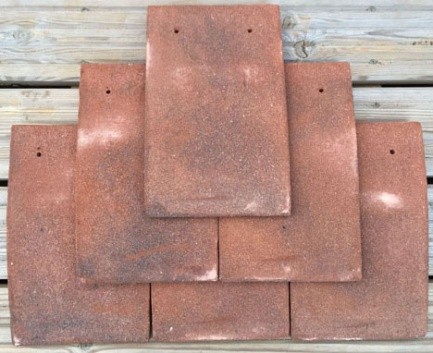
Clayhall Medium Blend - Carefully crafted to replicate all the features of handmade the Clayhall hand crafted range of tiles offers an excellent alternative when budget restrictions are a concern, but without compromising quality or durability.
Clayhall Dark Blend - Quality and durability in a budget clay roof tile. The Clayhall dark blend is sure to turn heads.
Clayhall Red Blend - A beautiful rustic clay roof tile. The Clayhall red blend is a firm favourite with our customers.
Clayhall Hamlet Mix - The Clayhall Hamlet mix is a gorgeous light and sandy looking clay roof tile that is a perennial favourite in the building trade.
Clayhall Birchwood Mix - The Clayhall Birchwood mix offers a gorgeous blend of lighter and darker shades in this diverse clay roof tile. If you are concerned that your roof tiles could look monotonous, the Clayhall Birchwood mix is the clay roof tile to choose.
The Conservation Range of roof tiles
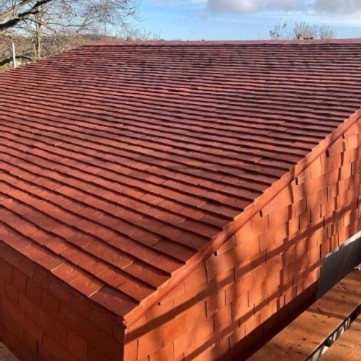
The Conservation range of roof tiles are available in a range of distinctive colours, created by using a very fine sand, The Conservation Weathered; A natural warm tone, achieving an instant mellow and settled look and The Conservation Red; perfect for vertical tiling especially suited for villages and hamlets with olde world vernacular charm.
Manufactured using high quality clay, achieving high strength and durability properties, giving homeowners and contractors peace of mind for many years to come. The conservation range comes with a complete set of associated fittings, including Hog Back Ridge, Half Round Ridge, Bonnet Hips, Valley tiles and External Angles.
The Conservation range of clay roof tiles comes in the following variations:
- Conservation Red
- Conservation Weathered
- Conservation Dark
Conservation Peg Tile
Plain clay roofing tiles laid to a double lap have been used for roof covering in England since before the Norman Conquest and tiles dating back to Roman Times have been discovered under excavation. From the outset clay plain tiles were made incorporating fixing features.
The Classic Edwardian roof tile
The Classic range of plain tiles is one of the finest ranges of clay tiles.
We source only the best raw materials for our craftsman to create beautifully handmade clay tiles of the highest quality and durability.
Tile Fittings available from Heritage Tiles
There are many fittings that are available from us a Heritage Tiles to complete your build to perfection. We stock and supply the following:
- Gable Tile
- Eave Tile
- Baby Porch Ridge
- 90 Degree Ext. Angle
- Universal Bonnet Hip
- Half Round Ridge
- Hogs Back Ridge
- Mono Ridge
- Third Round Ridge
- Universal Valley
- Ornamental Club
- Bat Tile Set
Bat Tiles:
Provide help for our bats with our range of bat friendly roof tiles.
Did you know that all UK bats and their roosts are protected by law? The Wildlife and Countryside Act introduced in 1981, gave legal protection to all bat species and their roosts in England.
Distinct species of bats prefer differing places to roost. The two most usually found species of bat in the UK are the Pipistrelle and Brown Long-Eared Bat. Pipistrelle prefer confined spaces such as under tiles on roofs and hanging spaces. The Brown Long-Eared Bat prefer roof timbers and ridges inside lofts. Heritage Clay Tiles can provide purpose made access points within your roof tiles or ridge tiles. The Bat Tile Set can form part of a mitigation package required by law for existing roosts or as potential access where a roost had not previously been present.
Select a Blend
Getting the right blend for your roofing project can feel daunting, but with our blend generator you can mix and match various blends of tiles to achieve the perfect blend.
Click here to make use of our online tool to choose your own unique blend.
Because our strict quality control provides a consistent tile size you can mix assorted styles and colours of tiles to make your roof unique to you. Please use the tool below to experiment with various blends.
Adjust the sliders to set the ingredients for your desired blend then click on the update mix button.
Alternatively click on any blend or tile to display it.
Whatever type of clay roof tile you want, Heritage Tiles will be able to help.
Clay Roof Tiles
Our top quality clay roof tiles are real market leaders for the simple reason that they look so good. The natural textures that encourages lichen to form, making the appearance look far more natural and weathered is particularly sought after on properties that happen to be in rural settings.
The way a standard machine made tile does look great in the right environment, however, when you require that traditional weathered appearance that you can only achieve with the finest quality clay roof tiles, Heritage Clay Tiles Ltd are the company that you should contact.
Heritage Clay Tiles Ltd have many years of valuable experience in the roofing industry and our name has become synonymous with the very highest levels of quality, value and excellence to our customers.
So it really doesn't matter what type of roofing project you have, a new development or an restoration project, our clay roof tiles will make the finished project stand out as a work of art, adding value and appeal to the property as a whole.
So if you are looking for the very highest quality clay roof tiles for any building project, Heritage Clay Tiles Ltd are without a doubt the company to order from.
A little information about Surrey
Where is Surrey?
Surrey is a ceremonial county in Southeast England. It is bordered by Greater London to the northeast, Kent to the east, East and West Sussex to the south, and Hampshire and Berkshire to the west. The largest settlement is Woking.
Surrey is divided in two by the chalk ridge of the North Downs, running east to west. The ridge is pierced by the rivers Wey and Mole, tributaries of the Thames, which formed the northern border of the county before modern redrawing of county boundaries, which has left part of its north bank within the county. To the north of the Downs the land is mostly flat, forming part of the basin of the Thames. The geology of the Surrey is dominated by London Clay in the east, Bagshot Sands in the west and alluvial deposits along the rivers.
To the south of the Downs in the western part of the county are the sandstone Surrey Hills, while further east is the plain of the Low Weald, rising in the extreme southeast to the edge of the hills of the High Weald. The Downs and the area to the south form part of a concentric pattern of geological deposits which also extends across southern Kent and most of Sussex, predominantly composed of Wealden Clay, Lower Greensand, and the chalk of the Downs.
Green belt Surrey
A good deal of Surrey is situated in the Metropolitan Green Belt. It contains valuable reserves of mature and treasured woodland. Among its many notable beauty spots are Box Hill, Leith Hill, Frensham Ponds, Newlands Corner and Puttenham & Crooksbury Commons. All the above are frequently visited by locals and tourists alike who wish to enjoy the beauty and tranquillity of this ancient and natural part of Surrey.
Surrey remains the most wooded county in all of England, with 22.4% coverage compared to a national average of 11.8% and as such is one of the few counties not to recommend new woodlands in the planning authorities' plans. In 2020 the Surrey Heath district had the highest proportion of tree cover in England at 41%. Surrey also contains England's principal concentration of lowland heath, on sandy soils in the west of the county.
The rivers of Surrey: A fisherman's dream
The longest river to enter Surrey is the Thames, which historically formed the boundary between the county and Middlesex. As a result of the 1965 boundary changes, many of the Surrey boroughs on the south bank of the river were transferred to Greater London, shortening the length associated with Surrey. The Thames now forms the Surrey and Berkshire border between Runnymede and Staines-upon-Thames, before flowing wholly within Surrey to Sunbury, from which point it marks the Surrey and Greater London border as far as Surbiton.
The River Wey is the longest tributary of the Thames above London. Other tributaries of the Thames with their courses partially in Surrey include the Mole, the Addlestone branch and Chertsey branch of the River Bourne, and the Hogsmill River, which drains Epsom and Ewell.
The upper reaches of the River Eden, a tributary of the Medway, are in Tandridge District, in east Surrey.
The River Colne and its anabranch, the Wraysbury River, make a brief appearance in the north of Surrey to join the Thames at Staines. Many angling clubs have stretches on these rivers and all are known for a wealth of different fish species.
Guildford Castle in Surrey
Guildford Castle, one of many fortresses originally established by the Normans to help them subdue the country, was rebuilt in stone and developed as a royal palace in the 12th century. Farnham Castle was built during the 12th century as a residence for the Bishop of Winchester, while other stone castles were constructed in the same period at Bletchingley by the de Clares and at Reigate by the Warennes.
It should be noted that the castles built in Surrey and elsewhere by the Normans were designed to show dominance over the conquered English and served as a lasting reminder that their new masters were extremely powerful and not to be messed with.
The Magna Carta and Surrey
During King John's ongoing struggle with the powerful barons, Magna Carta was issued in June 1215 at Runnymede near Egham. The Kings efforts to reverse this concession reignited the war, and in 1216 the barons invited Prince Louis of France to take the throne. Having landed in Kent and been welcomed in London, he advanced across Surrey to attack John, then at Winchester, occupying Reigate and Guildford castles along the way.
Guildford Castle later became one of the favourite residences of King Henry III, who considerably expanded the palace there. During the baronial revolt against Henry, in 1264 the rebel army of Simon de Montfort passed southwards through Surrey on their way to the Battle of Lewes in Sussex. Although the rebels were victorious, soon after the battle royal forces captured and destroyed Bletchingley Castle, whose owner Gilbert de Clare, Earl of Hertford and Gloucester, was de Montfort's most powerful ally.
By the 14th century, no new castles were being built, and the existing castles were becoming less important from a military perspective but remained a mark of social prestige. This eventually paved the way for more castles to be built at Starborough near Lingfield by Lord Cobham, and at Betchworth by John Fitzalan, whose father had recently inherited the Earldom of Surrey. Though Reigate and Bletchingley remained modest settlements, the role of their castles as local centres for the two leading aristocratic interests in Surrey had enabled them to gain borough status by the early 13th century. As a result, they gained representation in Parliament when it became established towards the end of that century, alongside the more substantial urban settlements of Guildford and Southwark. Surrey's third sizeable town, Kingston, despite its size, borough status and historical association with the monarchy, did not gain parliamentary representation until 1832.
Surrey trade and industry in the Middle Ages
Surrey's most significant source of prosperity in the later Middle Ages was the production of woollen cloth, which emerged during that period as England's main export industry. The county was an early centre of English textile manufacturing, benefiting from the presence of deposits of fuller's earth, the rare mineral composite important in the process of finishing cloth, around Reigate and Nutfield. The industry in Surrey was focused on Guildford, which gave its name to a variety of cloth, gilforte, which was exported widely across Europe and the Middle East and imitated by manufacturers elsewhere in Europe. However, as the English cloth industry expanded, Surrey was outstripped by other growing regions of production.
Fuller's earth from Surrey is still used to this day as a method of causing fishing line to sink in the water by fishermen, particularly trout fishermen, wishing to present nymphs and buzzer imitation fly patterns just below the water's surface film.
Products available from Heritage Clay Tiles Ltd in East Sussex
Clay Roof Tiles in East Sussex
Clayhall Roof Tiles in East Sussex
Conservation Peg Tiles in East Sussex
Conservation Roof Tiles in East Sussex
Edwardian Roof Tiles in East Sussex
Georgian Roof Tiles in East Sussex
Handmade Clay Tiles in East Sussex
Handmade Roof Tiles in East Sussex
High Quality Roof Tiles in East Sussex
Traditional Clay Tiles in East Sussex
Traditional Roof Tiles in East Sussex
Victorian Roof Tiles in East Sussex
Products available from Heritage Clay Tiles Ltd in Essex
Conservation Peg Tiles in Essex
Conservation Roof Tiles in Essex
High Quality Roof Tiles in Essex
Traditional Clay Tiles in Essex
Traditional Roof Tiles in Essex
Products available from Heritage Clay Tiles Ltd in Hampshire
Clayhall Roof Tiles in Hampshire
Conservation Peg Tiles in Hampshire
Conservation Roof Tiles in Hampshire
Edwardian Roof Tiles in Hampshire
Georgian Roof Tiles in Hampshire
Handmade Clay Tiles in Hampshire
Handmade Roof Tiles in Hampshire
High Quality Roof Tiles in Hampshire
Traditional Clay Tiles in Hampshire
Traditional Roof Tiles in Hampshire
Victorian Roof Tiles in Hampshire
Products available from Heritage Clay Tiles Ltd in Hertfordshire
Clay Roof Tiles in Hertfordshire
Clayhall Roof Tiles in Hertfordshire
Conservation Peg Tiles in Hertfordshire
Conservation Roof Tiles in Hertfordshire
Edwardian Roof Tiles in Hertfordshire
Georgian Roof Tiles in Hertfordshire
Handmade Clay Tiles in Hertfordshire
Handmade Roof Tiles in Hertfordshire
High Quality Roof Tiles in Hertfordshire
Traditional Clay Tiles in Hertfordshire
Traditional Roof Tiles in Hertfordshire
Victorian Roof Tiles in Hertfordshire
Products available from Heritage Clay Tiles Ltd in Kent
Conservation Peg Tiles in Kent
Conservation Roof Tiles in Kent
High Quality Roof Tiles in Kent
Traditional Clay Tiles in Kent
Traditional Roof Tiles in Kent
Products available from Heritage Clay Tiles Ltd in London
Conservation Peg Tiles in London
Conservation Roof Tiles in London
Edwardian Roof Tiles in London
High Quality Roof Tiles in London
Traditional Clay Tiles in London
Traditional Roof Tiles in London
Victorian Roof Tiles in London
Products available from Heritage Clay Tiles Ltd in Surrey
Conservation Peg Tiles in Surrey
Conservation Roof Tiles in Surrey
Edwardian Roof Tiles in Surrey
High Quality Roof Tiles in Surrey
Traditional Clay Tiles in Surrey
Traditional Roof Tiles in Surrey
Victorian Roof Tiles in Surrey
Products available from Heritage Clay Tiles Ltd in West Sussex
Clay Roof Tiles in West Sussex
Clayhall Roof Tiles in West Sussex
Conservation Peg Tiles in West Sussex
Conservation Roof Tiles in West Sussex
Edwardian Roof Tiles in West Sussex
Georgian Roof Tiles in West Sussex
Handmade Clay Tiles in West Sussex
Handmade Roof Tiles in West Sussex
High Quality Roof Tiles in West Sussex
Traditional Clay Tiles in West Sussex
Traditional Roof Tiles in West Sussex
Victorian Roof Tiles in West Sussex
Products available from Heritage Clay Tiles Ltd in Bedfordshire
Clay Roof Tiles in Bedfordshire
Clayhall Roof Tiles in Bedfordshire
Conservation Peg Tiles in Bedfordshire
Conservation Roof Tiles in Bedfordshire
Edwardian Roof Tiles in Bedfordshire
Georgian Roof Tiles in Bedfordshire
Handmade Clay Tiles in Bedfordshire
Handmade Roof Tiles in Bedfordshire
High Quality Roof Tiles in Bedfordshire
Traditional Clay Tiles in Bedfordshire
Products available from Heritage Clay Tiles Ltd in Berkshire
Clayhall Roof Tiles in Berkshire
Conservation Peg Tiles in Berkshire
Conservation Roof Tiles in Berkshire
Edwardian Roof Tiles in Berkshire
Georgian Roof Tiles in Berkshire
Handmade Clay Tiles in Berkshire
Handmade Roof Tiles in Berkshire
High Quality Roof Tiles in Berkshire
Traditional Clay Tiles in Berkshire
Products available from Heritage Clay Tiles Ltd in Buckinghamshire
Clay Roof Tiles in Buckinghamshire
Clayhall Roof Tiles in Buckinghamshire
Conservation Peg Tiles in Buckinghamshire
Conservation Roof Tiles in Buckinghamshire
Edwardian Roof Tiles in Buckinghamshire
Georgian Roof Tiles in Buckinghamshire
Handmade Clay Tiles in Buckinghamshire
Handmade Roof Tiles in Buckinghamshire
High Quality Roof Tiles in Buckinghamshire
Traditional Clay Tiles in Buckinghamshire
Products available from Heritage Clay Tiles Ltd in Cambridgeshire
Clay Roof Tiles in Cambridgeshire
Clayhall Roof Tiles in Cambridgeshire
Conservation Peg Tiles in Cambridgeshire
Conservation Roof Tiles in Cambridgeshire
Edwardian Roof Tiles in Cambridgeshire
Georgian Roof Tiles in Cambridgeshire
Handmade Clay Tiles in Cambridgeshire
Handmade Roof Tiles in Cambridgeshire
High Quality Roof Tiles in Cambridgeshire
Traditional Clay Tiles in Cambridgeshire
Traditional Roof Tiles in Cambridgeshire
Victorian Roof Tiles in Cambridgeshire
Products available from Heritage Clay Tiles Ltd in Oxfordshire
Clay Roof Tiles in Oxfordshire
Clayhall Roof Tiles in Oxfordshire
Conservation Peg Tiles in Oxfordshire
Conservation Roof Tiles in Oxfordshire
Edwardian Roof Tiles in Oxfordshire
Georgian Roof Tiles in Oxfordshire
Handmade Clay Tiles in Oxfordshire
Handmade Roof Tiles in Oxfordshire
High Quality Roof Tiles in Oxfordshire
Traditional Clay Tiles in Oxfordshire
Products available from Heritage Clay Tiles Ltd in Suffolk
Clayhall Roof Tiles in Suffolk
Conservation Peg Tiles in Suffolk
Conservation Roof Tiles in Suffolk
Edwardian Roof Tiles in Suffolk
Georgian Roof Tiles in Suffolk
Handmade Clay Tiles in Suffolk
Handmade Roof Tiles in Suffolk
High Quality Roof Tiles in Suffolk
Traditional Clay Tiles in Suffolk
Traditional Roof Tiles in Suffolk
Victorian Roof Tiles in Suffolk
Further Information
If you would like to know more or are interested in a quote we would be happy to help. Phone us on 01634 471 344, email us at sales@heritagetiles.co.uk and we will be in touch as soon as possible.