
Clay Roof Tiles in Cambridgeshire
Heritage Tiles: Emblematic of the finest craftsmanship
Heritage tiles are the professional roofer's choice for the highest quality clay roof tiles. We pride ourselves in manufacturing, stocking, and delivering the very finest in prestige clay roof tiles.
Heritage Tiles have several tile ranges that satisfy every architectural requirement. Vintage and historic properties right up to modern new builds are covered by the diverse range of clay roof tiles that we stock.
So, whether you are in the building trade, or simply wish to choose your own tiles, Heritage Tiles have the right product for your specific requirements.
What Heritage Tiles have to offer our customers?
- We offer specification and technical solutions to help you achieve the perfect build.
- We also offer expert design advice to all our customers.
- We are happy to engage in site visits with our clients.
- We have stockists and distributors throughout the United Kingdom to ensure that we can provide our expert service to a wider area.
- We can provide estimated quantities from plans supplied by our clients.
- We offer battening plans.
- We can deliver a standard and bespoke colour choice for our clay tile products.
- All our tiles are assessed and approved by Lucideon.
- We provide a nationwide delivery and collection service.
The ranges of clay roof tiles we supply.
The Clayhall Range of roof tiles:
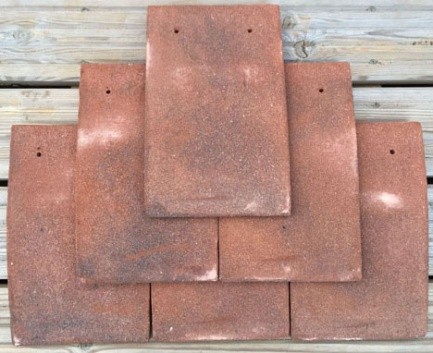
Clayhall Medium Blend - Carefully crafted to replicate all the features of handmade the Clayhall hand crafted range of tiles offers an excellent alternative when budget restrictions are a concern, but without compromising quality or durability.
Clayhall Dark Blend - Quality and durability in a budget clay roof tile. The Clayhall dark blend is sure to turn heads.
Clayhall Red Blend - A beautiful rustic clay roof tile. The Clayhall red blend is a firm favourite with our customers.
Clayhall Hamlet Mix - The Clayhall Hamlet mix is a gorgeous light and sandy looking clay roof tile that is a perennial favourite in the building trade.
Clayhall Birchwood Mix - The Clayhall Birchwood mix offers a gorgeous blend of lighter and darker shades in this diverse clay roof tile. If you are concerned that your roof tiles could look monotonous, the Clayhall Birchwood mix is the clay roof tile to choose.
The Conservation Range of roof tiles
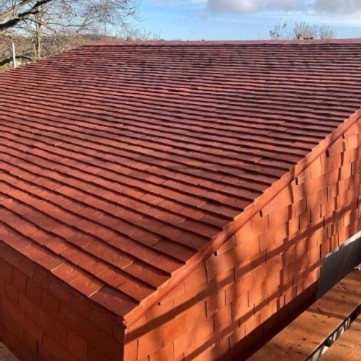
The Conservation range of roof tiles are available in a range of distinctive colours, created by using a very fine sand, The Conservation Weathered; A natural warm tone, achieving an instant mellow and settled look and The Conservation Red; perfect for vertical tiling especially suited for villages and hamlets with olde world vernacular charm.
Manufactured using high quality clay, achieving high strength and durability properties, giving homeowners and contractors peace of mind for many years to come. The conservation range comes with a complete set of associated fittings, including Hog Back Ridge, Half Round Ridge, Bonnet Hips, Valley tiles and External Angles.
The Conservation range of clay roof tiles comes in the following variations:
- Conservation Red
- Conservation Weathered
- Conservation Dark
Conservation Peg Tile
Plain clay roofing tiles laid to a double lap have been used for roof covering in England since before the Norman Conquest and tiles dating back to Roman Times have been discovered under excavation. From the outset clay plain tiles were made incorporating fixing features.
The Classic Edwardian roof tile
The Classic range of plain tiles is one of the finest ranges of clay tiles.
We source only the best raw materials for our craftsman to create beautifully handmade clay tiles of the highest quality and durability.
Tile Fittings available from Heritage Tiles
There are many fittings that are available from us a Heritage Tiles to complete your build to perfection. We stock and supply the following:
- Gable Tile
- Eave Tile
- Baby Porch Ridge
- 90 Degree Ext. Angle
- Universal Bonnet Hip
- Half Round Ridge
- Hogs Back Ridge
- Mono Ridge
- Third Round Ridge
- Universal Valley
- Ornamental Club
- Bat Tile Set
Bat Tiles:
Provide help for our bats with our range of bat friendly roof tiles.
Did you know that all UK bats and their roosts are protected by law? The Wildlife and Countryside Act introduced in 1981, gave legal protection to all bat species and their roosts in England.
Distinct species of bats prefer differing places to roost. The two most usually found species of bat in the UK are the Pipistrelle and Brown Long-Eared Bat. Pipistrelle prefer confined spaces such as under tiles on roofs and hanging spaces. The Brown Long-Eared Bat prefer roof timbers and ridges inside lofts. Heritage Clay Tiles can provide purpose made access points within your roof tiles or ridge tiles. The Bat Tile Set can form part of a mitigation package required by law for existing roosts or as potential access where a roost had not previously been present.
Select a Blend
Getting the right blend for your roofing project can feel daunting, but with our blend generator you can mix and match various blends of tiles to achieve the perfect blend.
Click here to make use of our online tool to choose your own unique blend.
Because our strict quality control provides a consistent tile size you can mix assorted styles and colours of tiles to make your roof unique to you. Please use the tool below to experiment with various blends.
Adjust the sliders to set the ingredients for your desired blend then click on the update mix button.
Alternatively click on any blend or tile to display it.
Whatever type of clay roof tile you want, Heritage Tiles will be able to help.
Clay Roof Tiles
Clay roof tiles for bats
Bats are a vital part of our native wildlife, accounting for almost a third of all mammal species in the United Kingdom and occupy a wide range of habitats, such as wetlands, woodlands, farmland, as well as urban areas. They can tell us a lot about the state of the environment, as they are top predators of common nocturnal insects and are sensitive to changes in land use practices. The pressures they face, such as landscape change, agricultural intensification, development, and habitat fragmentation are also relevant to many other wildlife species, making them excellent indicators for the wider health of the countries wildlife.
These are just some of the reasons why we should be doing all we can to encourage and protect bats when they visit our properties.
A great way to lend them a helping hand is to have some bat clay roof tiles fitted to your property.
What is a bat clay roof tile?
A clay roof tile that has been specifically designed for bats is simply a way of allowing them access to the roof space of your property.
Where access to the roof space is needed for bats, an aperture in the underlay may be required. Offsetting this aperture to one side of the bat access in the clay roof tile and limiting the cut in the horizontal direction, will reduce any potential for water to get under the tiles and into your property.
Clay roof tiles designed with bats in mind provide an access point into the roof for the bats. However, this aperture in the clay roof tiles may also enable insects to enter the roof space too. We recommend having bat clay roof tiles installed by a professional roofer. This way steps can be taken to reduce the risk of water ingress and other undesirable elements from entering through the bat tile.
For some bat species, particularly the bigger ones, it may be necessary to allow access into the roof space and this may involve cutting the felt or membrane, this should be done with great care as this creates the potential for water to enter the roof space which can cause damage to the rest of the property.
If you do decide to have bat clay roof tiles installed, ensure they are fitted professionally and that steps are taken inside the roof space to prevent an infestation, or nests of insects to be built. You will also want to prevent the bats themselves from entering the living area of your property.
By having your bat clay roof tiles fitted correctly, you will be helping to protect a vital part of our threatened ecology.
A little information about Cambridgeshire
Cambridgeshire: from ancient fens to famous spires
Cambridgeshire reveals itself through contrast. It is at once one of England's most internationally recognised counties and one of its most quietly unusual. Around Cambridge, the county is associated with colleges, chapels, scientific discovery, and a refined urban landscape shaped by stone, river, and green space. Further north and east, however, the scene changes dramatically into fenland horizons, straight drains, market towns, and broad agricultural skies. This shift is part of what makes Cambridgeshire such a compelling place to describe. It contains prestige and practicality in equal measure. The same county that has produced generations of scholars also depends on centuries of land drainage, farming skill, and river management. Add in cathedral heritage, Civil War associations and a deep reserve of folklore, and Cambridgeshire becomes far richer than its most famous images suggest.
Cambridgeshire: A county shaped by water, trade and institutions
For much of its history, Cambridgeshire has been defined by the challenge and opportunity of water. The county sits across landscapes that were once far marshier and more unpredictable than they appear today. Fenland communities learned to live with seasonal flooding, fishing, wildfowling, and difficult access, while settlements on slightly raised ground gained importance as crossing points and religious centres. Ely is one of the notable examples. Once effectively an island in the marshes, it became a place of spiritual power and later cathedral prominence, its skyline still carrying an authority that reaches far across the surrounding lowlands. Cambridge, meanwhile, grew at a river crossing where trade, communication and strategic value laid the groundwork for later academic prestige. This practical beginning matters, because it reminds us that even the most celebrated places in Cambridgeshire first grew from geography and movement.
As the county developed, trade and institutions increasingly shaped its identity. Medieval Cambridge benefited from fairs, river commerce, and the expansion of the university. Stourbridge Fair, once one of the largest in Europe, showed how commercially connected the area could be. Market towns across the county played their own roles, linking farmland and fenland production to broader networks of buying and selling. In the centuries that followed, Cambridgeshire also became a county of bold landscape change. Large-scale drainage schemes altered the Fens, bringing new wealth and agricultural productivity while also transforming long-established local customs. Huntingdonshire and the wider county added political drama through the career of Oliver Cromwell, while later centuries brought railways, military sites, and new scientific prestige. Cambridgeshire's story is therefore not static or singular. It is a history of adaptation, reinvention, and steady regional importance.
Interesting places across Cambridgeshire
Cambridge remains the county's best-known destination, but the wider map of Cambridgeshire is full of places with equally strong character. Ely is a natural highlight because of its cathedral, riverside and sense of elevation above the flat country around it. St Ives combines an attractive river setting with one of the county's best-known bridges, while Ramsey offers abbey heritage and market-town continuity in the open fenland setting. Wisbech stands apart for its elegant Georgian architecture and strong civic presence, offering a different visual experience from the university streets of Cambridge. Huntingdon retains a solid historic centre and a clear connection to Cromwell, while St Neots provides a lively riverside atmosphere that reflects the county's long relationship with trade and transport.
Cambridgeshire also rewards attention beyond its main urban centres. The Gog Magog Hills bring a rare sense of relief to the landscape south of Cambridge and offer archaeology, walking and legend in one location. Wandlebury Country Park adds Iron Age history to that downland edge. Wicken Fen remains one of the most evocative natural places in the county, important both for wildlife and for understanding what much of the fen country once looked like before drainage. Anglesey Abbey, despite its name, offers gardens and house rather than an abbey in the conventional sense, while Duxford gives the county one of Britain's leading aviation museums. Villages such as Grantchester contribute another kind of appeal through river meadows, literary associations, and the softer landscape of south Cambridgeshire. Together these places show that the county is as rewarding in detail as it is in reputation.
Old legends, strange tales, and fenland imagination in Cambridgeshire
Cambridgeshire folklore has a curious variety that suits the county's shifting landscapes. One of its most striking traditions centres on Gog and Magog, the giants associated with the hills south of Cambridge. These stories give a mythic explanation for landforms in a county where dramatic elevations are rare and therefore memorable. In some tellings, the giants shaped or occupied the hills; in others, giant figures carved into the turf kept the legend alive for generations of local people and university students. Caxton Gibbet adds a darker historical note, remembered both as a real place of execution and as a source of eerie local association. Such locations show how folklore in Cambridgeshire often grows at the meeting point of visible landmark and uneasy memory.
The county also holds stories of saints, hauntings, and fearsome reputations. Ely's ancient religious history has encouraged miracle tales and stories connected to Saint Etheldreda, while the marshy isolation of the old fenlands gave rise to legends that feel half historical and half dreamlike. The Witches of Warboys, though tied to a tragic episode with roots in neighbouring historical jurisdictions, remain strongly associated with the wider Cambridgeshire and Huntingdonshire story of belief, accusation, and fear in the late sixteenth century. Ghost stories cluster around college courts, parish churches, and riverside paths, where old stone and mist do much of the work. What unites these traditions is their sense of atmosphere. Cambridgeshire may be famous for reason, study, and innovation, but it has never lost its appetite for the uncanny.
Interesting facts and why Cambridgeshire stands out
Cambridgeshire includes some of the most iconic and some of the most understated places in eastern England. It is home to one of the world's best-known universities, yet much of its visual identity comes from quiet water, low bridges, open fields, and the dramatic singularity of Ely Cathedral rising above the Fens. The county has national importance in architecture, agriculture, science, aviation, and ecology. It also contains the lowest dry land point in the United Kingdom at Holme Fen, a fact that neatly captures the county's relationship with drainage and landscape change. Parker's Piece in Cambridge is associated with the early codification of football, while the surviving wetland at Wicken Fen preserves a sense of an older environment that once spread far more widely. These details help explain why Cambridgeshire feels so distinctive. It is a county where innovation and memory coexist unusually well.
Cambridgeshire is popular because it can be approached from more than one compelling direction. Some visitors are drawn by Cambridge and its academic grandeur, others by Ely, the fenland skies, the riverside towns, or the county's quieter historic villages. Folklore adds mystery, geography adds variety and history supplies a powerful sense of continuity. The result is a county that feels both celebrated and discoverable. Cambridgeshire is not simply a backdrop to one famous city. It is a rich regional landscape with its own stories, textures, and identities, making it a particularly effective and memorable location to visit and enjoy.
Products available from Heritage Clay Tiles Ltd in East Sussex
Clay Roof Tiles in East Sussex
Clayhall Roof Tiles in East Sussex
Conservation Peg Tiles in East Sussex
Conservation Roof Tiles in East Sussex
Edwardian Roof Tiles in East Sussex
Georgian Roof Tiles in East Sussex
Handmade Clay Tiles in East Sussex
Handmade Roof Tiles in East Sussex
High Quality Roof Tiles in East Sussex
Traditional Clay Tiles in East Sussex
Traditional Roof Tiles in East Sussex
Victorian Roof Tiles in East Sussex
Products available from Heritage Clay Tiles Ltd in Essex
Conservation Peg Tiles in Essex
Conservation Roof Tiles in Essex
High Quality Roof Tiles in Essex
Traditional Clay Tiles in Essex
Traditional Roof Tiles in Essex
Products available from Heritage Clay Tiles Ltd in Hampshire
Clayhall Roof Tiles in Hampshire
Conservation Peg Tiles in Hampshire
Conservation Roof Tiles in Hampshire
Edwardian Roof Tiles in Hampshire
Georgian Roof Tiles in Hampshire
Handmade Clay Tiles in Hampshire
Handmade Roof Tiles in Hampshire
High Quality Roof Tiles in Hampshire
Traditional Clay Tiles in Hampshire
Traditional Roof Tiles in Hampshire
Victorian Roof Tiles in Hampshire
Products available from Heritage Clay Tiles Ltd in Hertfordshire
Clay Roof Tiles in Hertfordshire
Clayhall Roof Tiles in Hertfordshire
Conservation Peg Tiles in Hertfordshire
Conservation Roof Tiles in Hertfordshire
Edwardian Roof Tiles in Hertfordshire
Georgian Roof Tiles in Hertfordshire
Handmade Clay Tiles in Hertfordshire
Handmade Roof Tiles in Hertfordshire
High Quality Roof Tiles in Hertfordshire
Traditional Clay Tiles in Hertfordshire
Traditional Roof Tiles in Hertfordshire
Victorian Roof Tiles in Hertfordshire
Products available from Heritage Clay Tiles Ltd in Kent
Conservation Peg Tiles in Kent
Conservation Roof Tiles in Kent
High Quality Roof Tiles in Kent
Traditional Clay Tiles in Kent
Traditional Roof Tiles in Kent
Products available from Heritage Clay Tiles Ltd in London
Conservation Peg Tiles in London
Conservation Roof Tiles in London
Edwardian Roof Tiles in London
High Quality Roof Tiles in London
Traditional Clay Tiles in London
Traditional Roof Tiles in London
Victorian Roof Tiles in London
Products available from Heritage Clay Tiles Ltd in Surrey
Conservation Peg Tiles in Surrey
Conservation Roof Tiles in Surrey
Edwardian Roof Tiles in Surrey
High Quality Roof Tiles in Surrey
Traditional Clay Tiles in Surrey
Traditional Roof Tiles in Surrey
Victorian Roof Tiles in Surrey
Products available from Heritage Clay Tiles Ltd in West Sussex
Clay Roof Tiles in West Sussex
Clayhall Roof Tiles in West Sussex
Conservation Peg Tiles in West Sussex
Conservation Roof Tiles in West Sussex
Edwardian Roof Tiles in West Sussex
Georgian Roof Tiles in West Sussex
Handmade Clay Tiles in West Sussex
Handmade Roof Tiles in West Sussex
High Quality Roof Tiles in West Sussex
Traditional Clay Tiles in West Sussex
Traditional Roof Tiles in West Sussex
Victorian Roof Tiles in West Sussex
Products available from Heritage Clay Tiles Ltd in Bedfordshire
Clay Roof Tiles in Bedfordshire
Clayhall Roof Tiles in Bedfordshire
Conservation Peg Tiles in Bedfordshire
Conservation Roof Tiles in Bedfordshire
Edwardian Roof Tiles in Bedfordshire
Georgian Roof Tiles in Bedfordshire
Handmade Clay Tiles in Bedfordshire
Handmade Roof Tiles in Bedfordshire
High Quality Roof Tiles in Bedfordshire
Traditional Clay Tiles in Bedfordshire
Products available from Heritage Clay Tiles Ltd in Berkshire
Clayhall Roof Tiles in Berkshire
Conservation Peg Tiles in Berkshire
Conservation Roof Tiles in Berkshire
Edwardian Roof Tiles in Berkshire
Georgian Roof Tiles in Berkshire
Handmade Clay Tiles in Berkshire
Handmade Roof Tiles in Berkshire
High Quality Roof Tiles in Berkshire
Traditional Clay Tiles in Berkshire
Products available from Heritage Clay Tiles Ltd in Buckinghamshire
Clay Roof Tiles in Buckinghamshire
Clayhall Roof Tiles in Buckinghamshire
Conservation Peg Tiles in Buckinghamshire
Conservation Roof Tiles in Buckinghamshire
Edwardian Roof Tiles in Buckinghamshire
Georgian Roof Tiles in Buckinghamshire
Handmade Clay Tiles in Buckinghamshire
Handmade Roof Tiles in Buckinghamshire
High Quality Roof Tiles in Buckinghamshire
Traditional Clay Tiles in Buckinghamshire
Products available from Heritage Clay Tiles Ltd in Cambridgeshire
Clayhall Roof Tiles in Cambridgeshire
Conservation Peg Tiles in Cambridgeshire
Conservation Roof Tiles in Cambridgeshire
Edwardian Roof Tiles in Cambridgeshire
Georgian Roof Tiles in Cambridgeshire
Handmade Clay Tiles in Cambridgeshire
Handmade Roof Tiles in Cambridgeshire
High Quality Roof Tiles in Cambridgeshire
Traditional Clay Tiles in Cambridgeshire
Traditional Roof Tiles in Cambridgeshire
Victorian Roof Tiles in Cambridgeshire
Products available from Heritage Clay Tiles Ltd in Oxfordshire
Clay Roof Tiles in Oxfordshire
Clayhall Roof Tiles in Oxfordshire
Conservation Peg Tiles in Oxfordshire
Conservation Roof Tiles in Oxfordshire
Edwardian Roof Tiles in Oxfordshire
Georgian Roof Tiles in Oxfordshire
Handmade Clay Tiles in Oxfordshire
Handmade Roof Tiles in Oxfordshire
High Quality Roof Tiles in Oxfordshire
Traditional Clay Tiles in Oxfordshire
Products available from Heritage Clay Tiles Ltd in Suffolk
Clayhall Roof Tiles in Suffolk
Conservation Peg Tiles in Suffolk
Conservation Roof Tiles in Suffolk
Edwardian Roof Tiles in Suffolk
Georgian Roof Tiles in Suffolk
Handmade Clay Tiles in Suffolk
Handmade Roof Tiles in Suffolk
High Quality Roof Tiles in Suffolk
Traditional Clay Tiles in Suffolk
Traditional Roof Tiles in Suffolk
Victorian Roof Tiles in Suffolk
Further Information
If you would like to know more or are interested in a quote we would be happy to help. Phone us on 01634 471 344, email us at sales@heritagetiles.co.uk and we will be in touch as soon as possible.