
Victorian Roof Tiles in Kent
Heritage Tiles: Emblematic of the finest craftsmanship
Heritage tiles are the professional roofer's choice for the highest quality clay roof tiles. We pride ourselves in manufacturing, stocking, and delivering the very finest in prestige clay roof tiles.
Heritage Tiles have several tile ranges that satisfy every architectural requirement. Vintage and historic properties right up to modern new builds are covered by the diverse range of clay roof tiles that we stock.
So, whether you are in the building trade, or simply wish to choose your own tiles, Heritage Tiles have the right product for your specific requirements.
What Heritage Tiles have to offer our customers?
- We offer specification and technical solutions to help you achieve the perfect build.
- We also offer expert design advice to all our customers.
- We are happy to engage in site visits with our clients.
- We have stockists and distributors throughout the United Kingdom to ensure that we can provide our expert service to a wider area.
- We can provide estimated quantities from plans supplied by our clients.
- We offer battening plans.
- We can deliver a standard and bespoke colour choice for our clay tile products.
- All our tiles are assessed and approved by Lucideon.
- We provide a nationwide delivery and collection service.
The ranges of clay roof tiles we supply.
The Clayhall Range of roof tiles:
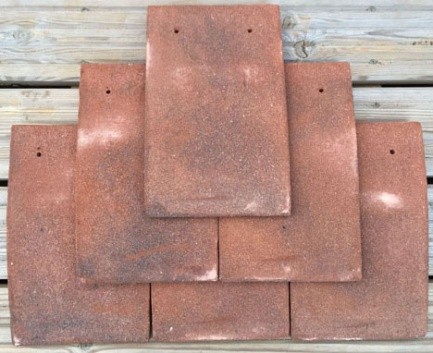
Clayhall Medium Blend - Carefully crafted to replicate all the features of handmade the Clayhall hand crafted range of tiles offers an excellent alternative when budget restrictions are a concern, but without compromising quality or durability.
Clayhall Dark Blend - Quality and durability in a budget clay roof tile. The Clayhall dark blend is sure to turn heads.
Clayhall Red Blend - A beautiful rustic clay roof tile. The Clayhall red blend is a firm favourite with our customers.
Clayhall Hamlet Mix - The Clayhall Hamlet mix is a gorgeous light and sandy looking clay roof tile that is a perennial favourite in the building trade.
Clayhall Birchwood Mix - The Clayhall Birchwood mix offers a gorgeous blend of lighter and darker shades in this diverse clay roof tile. If you are concerned that your roof tiles could look monotonous, the Clayhall Birchwood mix is the clay roof tile to choose.
The Conservation Range of roof tiles
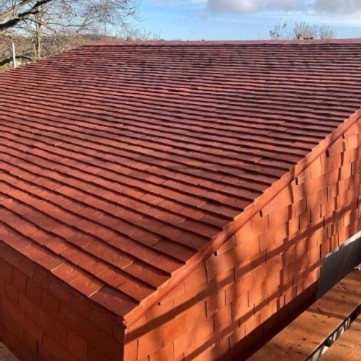
The Conservation range of roof tiles are available in a range of distinctive colours, created by using a very fine sand, The Conservation Weathered; A natural warm tone, achieving an instant mellow and settled look and The Conservation Red; perfect for vertical tiling especially suited for villages and hamlets with olde world vernacular charm.
Manufactured using high quality clay, achieving high strength and durability properties, giving homeowners and contractors peace of mind for many years to come. The conservation range comes with a complete set of associated fittings, including Hog Back Ridge, Half Round Ridge, Bonnet Hips, Valley tiles and External Angles.
The Conservation range of clay roof tiles comes in the following variations:
- Conservation Red
- Conservation Weathered
- Conservation Dark
Conservation Peg Tile
Plain clay roofing tiles laid to a double lap have been used for roof covering in England since before the Norman Conquest and tiles dating back to Roman Times have been discovered under excavation. From the outset clay plain tiles were made incorporating fixing features.
The Classic Edwardian roof tile
The Classic range of plain tiles is one of the finest ranges of clay tiles.
We source only the best raw materials for our craftsman to create beautifully handmade clay tiles of the highest quality and durability.
Tile Fittings available from Heritage Tiles
There are many fittings that are available from us a Heritage Tiles to complete your build to perfection. We stock and supply the following:
- Gable Tile
- Eave Tile
- Baby Porch Ridge
- 90 Degree Ext. Angle
- Universal Bonnet Hip
- Half Round Ridge
- Hogs Back Ridge
- Mono Ridge
- Third Round Ridge
- Universal Valley
- Ornamental Club
- Bat Tile Set
Bat Tiles:
Provide help for our bats with our range of bat friendly roof tiles.
Did you know that all UK bats and their roosts are protected by law? The Wildlife and Countryside Act introduced in 1981, gave legal protection to all bat species and their roosts in England.
Distinct species of bats prefer differing places to roost. The two most usually found species of bat in the UK are the Pipistrelle and Brown Long-Eared Bat. Pipistrelle prefer confined spaces such as under tiles on roofs and hanging spaces. The Brown Long-Eared Bat prefer roof timbers and ridges inside lofts. Heritage Clay Tiles can provide purpose made access points within your roof tiles or ridge tiles. The Bat Tile Set can form part of a mitigation package required by law for existing roosts or as potential access where a roost had not previously been present.
Select a Blend
Getting the right blend for your roofing project can feel daunting, but with our blend generator you can mix and match various blends of tiles to achieve the perfect blend.
Click here to make use of our online tool to choose your own unique blend.
Because our strict quality control provides a consistent tile size you can mix assorted styles and colours of tiles to make your roof unique to you. Please use the tool below to experiment with various blends.
Adjust the sliders to set the ingredients for your desired blend then click on the update mix button.
Alternatively click on any blend or tile to display it.
Whatever type of clay roof tile you want, Heritage Tiles will be able to help.
Victorian Roof Tiles
Individuality is something that most of us crave! Many of us do not want to look the same in what we wear, what we drive and what our property looks like. Having a unique quality is something that most of us want in life. With the classic Victorian roof tile from Heritage Clay Tiles Ltd, you are now able to achieve this individual statement.
With the gorgeous looks of our Victorian roof tile, you can rest assured that your property will stand head and shoulders above the rest. The hand crafted beauty of our Victorian roof tile really is second to none. The delightful colour and texture of this premium roof tile is something that will make your property really look amazing.
Victorian roof tile at a great price
Even though we have hand crafted these wonderful roof tiles out of the very finest raw materials, you won't have to pay a kings ransom to enjoy them. We keep the price of our Victorian roof tile keen, as we do on all of our roofing products, so that everyone can enjoy top quality and aesthetic beauty, no matter what their budget.
So for the very finest quality, the toughest roof tiles that look truly amazing, call Heritage Clay Tiles Ltd and discuss an order for our Victorian roof tile with one of our dedicated team of professionals.
Roofs built during the Victorian era were almost exclusively made from slate, which made them somewhat different from houses built previously. Today however, when refurbished, the clay roof tile is often used and the Victorian roof tile from Heritage Clay Tiles Ltd is a firm favourite with many builders and roofers alike.
The Victorian roof was often decorated with small ornate carved ornaments on the gable ends and the ridge where the two sloping sides of the roof joined. Ridge tiles made from terracotta were also added to make the roofs of Victorian houses even more appealing to the eye.
Victorian roof tile and wooden beams for that traditional Victorian look
Aged wooden panels were frequently incorporated into the gable ends of Victorian roofs. This was to make the roof one of the most attractive and eye catching parts of the house. Even today, these wooden beams used in conjunction with a quality Victorian roof tile will still catch the attention of passers by.
The Victorians really knew a thing or two about design and the beauty of their houses, particularly the roofs is something that we are able to replicate today with the gorgeous Victorian roof tile from Heritage Clay Tiles Ltd.
A little information about Kent
The history of Kent
The area of Kent was first believed to be occupied by early humans, intermittently due to periods of extreme cold, during the Palaeolithic, also referred to as the Old Stone Age. The reason for this assumption is due to the discovery of an early Neanderthal skull found in the quarries at Swanscombe. The Medway megaliths were built during the Neolithic era. There is a rich sequence of Bronze Age, Celtic Iron Age, and Britto-Roman era occupation, as indicated by finds and features such as the Ringlemere gold cup and the Roman villas of the Darent valley.
Caesar spent time in Kent
The Roman Emperor Julius Caesar described the area as Cantium, or the home of the Cantiaci, in 51 BC. The extreme west of the modern county was by the time of Roman Britain occupied by a Celtic Iron Age tribe known as the Regni. Caesar wrote that the people of Kent were "by far the most civilised inhabitants of Britain". This was deemed rather unusual at the time, as many tribes were considered to be rather primitive and savage by the Roman occupiers.
Following the withdrawal of the Romans from Kent, large numbers of Germanic speakers from mainland Europe began to settle in Kent, bringing their language, which eventually came to be known as Old English. While they expelled the native Romano-British population, some likely remained in the area, eventually assimilating with the newcomers. Of the invading tribes, the Jutes were the most prominent, and the area became a Jutish kingdom recorded as Cantia in about 730 and Cent in 835. The early medieval inhabitants of the county were referred to as the Cantwara, or Kentish people.
The Jutes originated from the Jutland Peninsula in modern-day Denmark and migrated to Britain during the early medieval period.
Origins of the Jutes
The Jutes were one of the early Germanic tribes, believed to have come from the Jutland Peninsula, which is part of present-day Denmark. This region was significant for various Germanic tribes due to its strategic location between the North Sea and the Baltic Sea, facilitating maritime activities and cultural exchanges.
Kent plays a major part in religion
In the year 597, Pope Gregory I appointed the religious missionary who was to become Saint Augustine of Canterbury after his death as the first Archbishop of Canterbury. Although we now consider the archbishops association with their official residence at Lambeth Palace in London, Canterbury is in fact situated in Kent.
In the previous year, Augustine successfully converted the pagan King Aethelberht of Kent to Christianity. The Diocese of Canterbury became England's first Episcopal See with first cathedral and has since remained England's centre of Christianity. The second designated English cathedral was for West Kent at Rochester Cathedral.
Kent offers a specific designation to its inhabitants
Kent was traditionally partitioned into East and West Kent, and into lathes and hundreds. The traditional border of East and West Kent was the county's main river, the Medway. Men and women from east of the Medway are Men, or Maids of Kent, those from the west are Kentishmen or Kentish Maids. The divide has been explained by some as originating in the Anglo-Saxon migrations, with Jutes mainly settling east of the Medway and Saxons settling west of it.
In the 11th century, the people of Kent, or Chenth, as it appeared in the Domesday Book, adopted the motto Invicta, meaning "undefeated" or "unconquered". The adoption of this motto followed the invasion of Britain by William II of Normandy, as he was unable to subdue the county and they negotiated favourable terms. The continued resistance of the Kentish people against the Normans led to Kent's designation as a semi-autonomous county palatine in 1067. Under the nominal rule of William's half-brother Odo of Bayeux, the county was granted similar powers to those granted in the areas bordering Wales and Scotland.
Kent was to be the seat of resistance and rebellion
During the medieval and early modern period, Kent played a significant role in several of England's most famous and notable rebellions, including the Peasants' Revolt of 1381, led by Wat Tyler, Jack Cade's Kent rebellion of 1450, and Wyatt's Rebellion of 1554 that was pitted against Queen Mary I.
Kent witnesses' tensions with France and the Netherlands
By the 17th century, tensions between Britain and the powers of the Netherlands and France began to increase and led to increasing military build-up in the county. Forts for defence purposes were built all along the coast following the raid on the Medway, a successful attack by the Dutch navy on the shipyards of the Medway towns in 1667.
The ongoing tensions persisted into the 18th century with further wars with France, during which the Medway became the primary base for a fleet that could act along the Dutch and French coasts. When the theatre of operation moved to the Atlantic, this role was assumed by Portsmouth and Plymouth, with Chatham concentrating on shipbuilding and ship repair. As an indication of the area's military importance, the first Ordnance Survey map ever drawn was a one-inch map of Kent, published in 1801. Many of the Georgian naval buildings still stand in this part of Kent.
The Kent coast was a smugglers paradise
In the early 19th century, smugglers were continually active on the Kent coastline. Gangs such as The Aldington Gang brought spirits, tobacco, and salt to the county, and transported goods such as wool across the sea to France. The authorities posted troops along the Kent coast in an attempt to thwart the smugglers activities, with mixed results.
London takes control of parts of Kent
In 1889, the County of London was created and took over responsibility for local administration of parts of north-west Kent. These included the towns of Greenwich, Woolwich, Plumstead, Deptford, Lee, Eltham, Charlton, and Kidbrooke. In 1900, however, Kent absorbed the district of Penge. Some of Kent is contiguous with the Greater London sprawl, notably parts of Dartford.
Originally, the border between Kent and Sussex ran through the towns of Tunbridge Wells and Lamberhurst. In 1894, by the Local Government Act, the parts of these towns that lay in East Sussex were absorbed by Kent.
Wartime aviation history made world famous over Kent
During the Second World War, much of the Battle of Britain was fought in the skies over Kent.
Between June 1944 and March 1945, more than 10,000 V1 flying bombs, or Doodlebugs as they were referred to, were fired towards London from bases in Northern France. Although many were destroyed by aircraft, anti-aircraft guns, and barrage balloons, both London and Kent were hit by around 2,500 of these bombs. The distinct sound that the V1 flying bombs made ensured that you were safe if you heard them pass overhead. It was only if their noisy engine cut out above you that you needed to take immediate shelter. The V2 rocket was a more feared device, as it was more devastating and was also silent in its approach.
Kent after World War 2
After the war, Kent's borders changed several more times. In 1965, the London boroughs of Bromley and Bexley were created from nine towns formerly in Kent. In 1998, Rochester, Strood, Chatham, Gillingham and Rainham left the administrative county of Kent to form the unitary authority of Medway. Plans for another unitary authority in north-west Kent were dropped, but in 2016 consultations began between five Kent local authorities, namely Canterbury, Thanet, Dover, Folkestone & Hythe, and Ashford, with a view to forming a new unified authority for East Kent, although remaining within the auspices of Kent County Council. This idea was eventually dropped.
For almost nine hundred years, a small part of present-day East London, the North Woolwich, E16 area, formed part of the county of Kent.
Products available from Heritage Clay Tiles Ltd in East Sussex
Clay Roof Tiles in East Sussex
Clayhall Roof Tiles in East Sussex
Conservation Peg Tiles in East Sussex
Conservation Roof Tiles in East Sussex
Edwardian Roof Tiles in East Sussex
Georgian Roof Tiles in East Sussex
Handmade Clay Tiles in East Sussex
Handmade Roof Tiles in East Sussex
High Quality Roof Tiles in East Sussex
Traditional Clay Tiles in East Sussex
Traditional Roof Tiles in East Sussex
Victorian Roof Tiles in East Sussex
Products available from Heritage Clay Tiles Ltd in Essex
Conservation Peg Tiles in Essex
Conservation Roof Tiles in Essex
High Quality Roof Tiles in Essex
Traditional Clay Tiles in Essex
Traditional Roof Tiles in Essex
Products available from Heritage Clay Tiles Ltd in Hampshire
Clayhall Roof Tiles in Hampshire
Conservation Peg Tiles in Hampshire
Conservation Roof Tiles in Hampshire
Edwardian Roof Tiles in Hampshire
Georgian Roof Tiles in Hampshire
Handmade Clay Tiles in Hampshire
Handmade Roof Tiles in Hampshire
High Quality Roof Tiles in Hampshire
Traditional Clay Tiles in Hampshire
Traditional Roof Tiles in Hampshire
Victorian Roof Tiles in Hampshire
Products available from Heritage Clay Tiles Ltd in Hertfordshire
Clay Roof Tiles in Hertfordshire
Clayhall Roof Tiles in Hertfordshire
Conservation Peg Tiles in Hertfordshire
Conservation Roof Tiles in Hertfordshire
Edwardian Roof Tiles in Hertfordshire
Georgian Roof Tiles in Hertfordshire
Handmade Clay Tiles in Hertfordshire
Handmade Roof Tiles in Hertfordshire
High Quality Roof Tiles in Hertfordshire
Traditional Clay Tiles in Hertfordshire
Traditional Roof Tiles in Hertfordshire
Victorian Roof Tiles in Hertfordshire
Products available from Heritage Clay Tiles Ltd in Kent
Conservation Peg Tiles in Kent
Conservation Roof Tiles in Kent
High Quality Roof Tiles in Kent
Traditional Clay Tiles in Kent
Traditional Roof Tiles in Kent
Products available from Heritage Clay Tiles Ltd in London
Conservation Peg Tiles in London
Conservation Roof Tiles in London
Edwardian Roof Tiles in London
High Quality Roof Tiles in London
Traditional Clay Tiles in London
Traditional Roof Tiles in London
Victorian Roof Tiles in London
Products available from Heritage Clay Tiles Ltd in Surrey
Conservation Peg Tiles in Surrey
Conservation Roof Tiles in Surrey
Edwardian Roof Tiles in Surrey
High Quality Roof Tiles in Surrey
Traditional Clay Tiles in Surrey
Traditional Roof Tiles in Surrey
Victorian Roof Tiles in Surrey
Products available from Heritage Clay Tiles Ltd in West Sussex
Clay Roof Tiles in West Sussex
Clayhall Roof Tiles in West Sussex
Conservation Peg Tiles in West Sussex
Conservation Roof Tiles in West Sussex
Edwardian Roof Tiles in West Sussex
Georgian Roof Tiles in West Sussex
Handmade Clay Tiles in West Sussex
Handmade Roof Tiles in West Sussex
High Quality Roof Tiles in West Sussex
Traditional Clay Tiles in West Sussex
Traditional Roof Tiles in West Sussex
Victorian Roof Tiles in West Sussex
Products available from Heritage Clay Tiles Ltd in Bedfordshire
Clay Roof Tiles in Bedfordshire
Clayhall Roof Tiles in Bedfordshire
Conservation Peg Tiles in Bedfordshire
Conservation Roof Tiles in Bedfordshire
Edwardian Roof Tiles in Bedfordshire
Georgian Roof Tiles in Bedfordshire
Handmade Clay Tiles in Bedfordshire
Handmade Roof Tiles in Bedfordshire
High Quality Roof Tiles in Bedfordshire
Traditional Clay Tiles in Bedfordshire
Products available from Heritage Clay Tiles Ltd in Berkshire
Clayhall Roof Tiles in Berkshire
Conservation Peg Tiles in Berkshire
Conservation Roof Tiles in Berkshire
Edwardian Roof Tiles in Berkshire
Georgian Roof Tiles in Berkshire
Handmade Clay Tiles in Berkshire
Handmade Roof Tiles in Berkshire
High Quality Roof Tiles in Berkshire
Traditional Clay Tiles in Berkshire
Products available from Heritage Clay Tiles Ltd in Buckinghamshire
Clay Roof Tiles in Buckinghamshire
Clayhall Roof Tiles in Buckinghamshire
Conservation Peg Tiles in Buckinghamshire
Conservation Roof Tiles in Buckinghamshire
Edwardian Roof Tiles in Buckinghamshire
Georgian Roof Tiles in Buckinghamshire
Handmade Clay Tiles in Buckinghamshire
Handmade Roof Tiles in Buckinghamshire
High Quality Roof Tiles in Buckinghamshire
Traditional Clay Tiles in Buckinghamshire
Products available from Heritage Clay Tiles Ltd in Cambridgeshire
Clay Roof Tiles in Cambridgeshire
Clayhall Roof Tiles in Cambridgeshire
Conservation Peg Tiles in Cambridgeshire
Conservation Roof Tiles in Cambridgeshire
Edwardian Roof Tiles in Cambridgeshire
Georgian Roof Tiles in Cambridgeshire
Handmade Clay Tiles in Cambridgeshire
Handmade Roof Tiles in Cambridgeshire
High Quality Roof Tiles in Cambridgeshire
Traditional Clay Tiles in Cambridgeshire
Traditional Roof Tiles in Cambridgeshire
Victorian Roof Tiles in Cambridgeshire
Products available from Heritage Clay Tiles Ltd in Oxfordshire
Clay Roof Tiles in Oxfordshire
Clayhall Roof Tiles in Oxfordshire
Conservation Peg Tiles in Oxfordshire
Conservation Roof Tiles in Oxfordshire
Edwardian Roof Tiles in Oxfordshire
Georgian Roof Tiles in Oxfordshire
Handmade Clay Tiles in Oxfordshire
Handmade Roof Tiles in Oxfordshire
High Quality Roof Tiles in Oxfordshire
Traditional Clay Tiles in Oxfordshire
Products available from Heritage Clay Tiles Ltd in Suffolk
Clayhall Roof Tiles in Suffolk
Conservation Peg Tiles in Suffolk
Conservation Roof Tiles in Suffolk
Edwardian Roof Tiles in Suffolk
Georgian Roof Tiles in Suffolk
Handmade Clay Tiles in Suffolk
Handmade Roof Tiles in Suffolk
High Quality Roof Tiles in Suffolk
Traditional Clay Tiles in Suffolk
Traditional Roof Tiles in Suffolk
Victorian Roof Tiles in Suffolk
Further Information
If you would like to know more or are interested in a quote we would be happy to help. Phone us on 01634 471 344, email us at sales@heritagetiles.co.uk and we will be in touch as soon as possible.