
Bat Tiles in Surrey
Heritage Tiles: Emblematic of the finest craftsmanship
Heritage tiles are the professional roofer's choice for the highest quality clay roof tiles. We pride ourselves in manufacturing, stocking, and delivering the very finest in prestige clay roof tiles.
Heritage Tiles have several tile ranges that satisfy every architectural requirement. Vintage and historic properties right up to modern new builds are covered by the diverse range of clay roof tiles that we stock.
So, whether you are in the building trade, or simply wish to choose your own tiles, Heritage Tiles have the right product for your specific requirements.
What Heritage Tiles have to offer our customers?
- We offer specification and technical solutions to help you achieve the perfect build.
- We also offer expert design advice to all our customers.
- We are happy to engage in site visits with our clients.
- We have stockists and distributors throughout the United Kingdom to ensure that we can provide our expert service to a wider area.
- We can provide estimated quantities from plans supplied by our clients.
- We offer battening plans.
- We can deliver a standard and bespoke colour choice for our clay tile products.
- All our tiles are assessed and approved by Lucideon.
- We provide a nationwide delivery and collection service.
The ranges of clay roof tiles we supply.
The Clayhall Range of roof tiles:
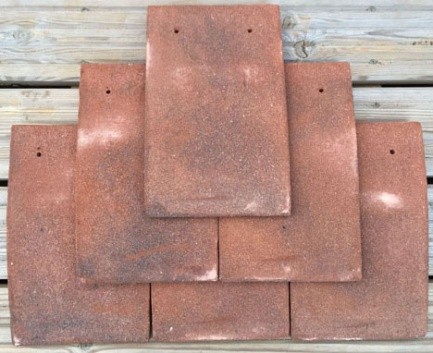
Clayhall Medium Blend - Carefully crafted to replicate all the features of handmade the Clayhall hand crafted range of tiles offers an excellent alternative when budget restrictions are a concern, but without compromising quality or durability.
Clayhall Dark Blend - Quality and durability in a budget clay roof tile. The Clayhall dark blend is sure to turn heads.
Clayhall Red Blend - A beautiful rustic clay roof tile. The Clayhall red blend is a firm favourite with our customers.
Clayhall Hamlet Mix - The Clayhall Hamlet mix is a gorgeous light and sandy looking clay roof tile that is a perennial favourite in the building trade.
Clayhall Birchwood Mix - The Clayhall Birchwood mix offers a gorgeous blend of lighter and darker shades in this diverse clay roof tile. If you are concerned that your roof tiles could look monotonous, the Clayhall Birchwood mix is the clay roof tile to choose.
The Conservation Range of roof tiles
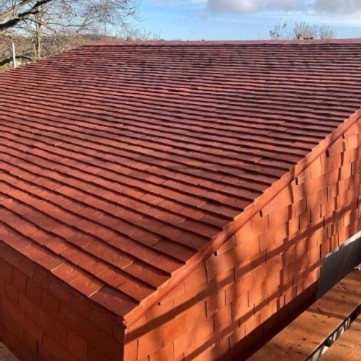
The Conservation range of roof tiles are available in a range of distinctive colours, created by using a very fine sand, The Conservation Weathered; A natural warm tone, achieving an instant mellow and settled look and The Conservation Red; perfect for vertical tiling especially suited for villages and hamlets with olde world vernacular charm.
Manufactured using high quality clay, achieving high strength and durability properties, giving homeowners and contractors peace of mind for many years to come. The conservation range comes with a complete set of associated fittings, including Hog Back Ridge, Half Round Ridge, Bonnet Hips, Valley tiles and External Angles.
The Conservation range of clay roof tiles comes in the following variations:
- Conservation Red
- Conservation Weathered
- Conservation Dark
Conservation Peg Tile
Plain clay roofing tiles laid to a double lap have been used for roof covering in England since before the Norman Conquest and tiles dating back to Roman Times have been discovered under excavation. From the outset clay plain tiles were made incorporating fixing features.
The Classic Edwardian roof tile
The Classic range of plain tiles is one of the finest ranges of clay tiles.
We source only the best raw materials for our craftsman to create beautifully handmade clay tiles of the highest quality and durability.
Tile Fittings available from Heritage Tiles
There are many fittings that are available from us a Heritage Tiles to complete your build to perfection. We stock and supply the following:
- Gable Tile
- Eave Tile
- Baby Porch Ridge
- 90 Degree Ext. Angle
- Universal Bonnet Hip
- Half Round Ridge
- Hogs Back Ridge
- Mono Ridge
- Third Round Ridge
- Universal Valley
- Ornamental Club
- Bat Tile Set
Bat Tiles:
Provide help for our bats with our range of bat friendly roof tiles.
Did you know that all UK bats and their roosts are protected by law? The Wildlife and Countryside Act introduced in 1981, gave legal protection to all bat species and their roosts in England.
Distinct species of bats prefer differing places to roost. The two most usually found species of bat in the UK are the Pipistrelle and Brown Long-Eared Bat. Pipistrelle prefer confined spaces such as under tiles on roofs and hanging spaces. The Brown Long-Eared Bat prefer roof timbers and ridges inside lofts. Heritage Clay Tiles can provide purpose made access points within your roof tiles or ridge tiles. The Bat Tile Set can form part of a mitigation package required by law for existing roosts or as potential access where a roost had not previously been present.
Select a Blend
Getting the right blend for your roofing project can feel daunting, but with our blend generator you can mix and match various blends of tiles to achieve the perfect blend.
Click here to make use of our online tool to choose your own unique blend.
Because our strict quality control provides a consistent tile size you can mix assorted styles and colours of tiles to make your roof unique to you. Please use the tool below to experiment with various blends.
Adjust the sliders to set the ingredients for your desired blend then click on the update mix button.
Alternatively click on any blend or tile to display it.
Whatever type of clay roof tile you want, Heritage Tiles will be able to help.
Bat Tiles
Supporting bat species with bat tiles in the United Kingdom
The United Kingdom is home to eighteen species of bats, seventeen of which are known to breed in the UK. These bats play a vital role in ecosystems by controlling insect populations and contributing to biodiversity. As traditional roosting sites decline, the use of bat tiles has become an increasingly important way to support different bat species, particularly those that rely on buildings for shelter.
Bat tiles provide discreet, long lasting roosting spaces integrated into roofs or walls, helping to replace the natural gaps and crevices that many bat species depend on.
Bat species that benefit from bat tiles
Common Pipistrelle (Pipistrellus pipistrellus)
The Common Pipistrelle is the most widespread bat species in the UK and is frequently found in towns, villages, and gardens. This species commonly roosts in buildings, making it particularly well suited to the use of bat tiles. Bat tiles installed on residential and commercial buildings can provide secure roosts close to feeding areas, supporting this species throughout the year.
Soprano Pipistrelle (Pipistrellus pygmaeus)
Similar in appearance to the Common Pipistrelle, the Soprano Pipistrelle is also widespread and often associated with buildings near water. Bat tiles offer suitable roosting conditions for this species, especially when installed in locations that provide easy access to foraging habitats.
Nathusius' Pipistrelle (Pipistrellus nathusii)
Nathusius' Pipistrelle is a less common species in the UK and is known for its migratory behaviour. While it may use a range of roost types, bat tiles can provide valuable temporary or seasonal roosting opportunities, particularly during migration or in areas where traditional roosts are limited.
Brown Long Eared Bat (Plecotus auritus)
The Brown Long Eared Bat often roosts in roof spaces and older buildings. Bat tiles can help support this species by providing quiet, undisturbed roosting spaces within buildings, reducing the need for bats to rely on increasingly scarce traditional roof voids.
Noctule Bat (Nyctalus noctula)
Noctule bats typically roost in trees, but they are also known to use buildings. In areas where mature trees are limited, bat tiles can offer alternative roosting opportunities, helping to support this larger bat species within developed landscapes.
Lesser Horseshoe Bat (Rhinolophus hipposideros)
The Lesser Horseshoe Bat often roosts in buildings, particularly older structures. While this species has specific roosting requirements, bat tiles can form part of a wider strategy to provide suitable roosting features in appropriate locations, especially where building based roosts are already used.
Greater Horseshoe Bat (Rhinolophus ferrumequinum)
Similar to the Lesser Horseshoe Bat but larger, this species also relies heavily on buildings for roosting. Bat tiles can help maintain roosting opportunities within buildings, supporting conservation efforts where suitable structures are available.
Daubenton's Bat (Myotis daubentonii)
Often found near water, Daubenton's Bat typically roosts in trees and structures close to rivers and lakes. Bat tiles installed on buildings near watercourses can provide additional roosting options for this species, particularly in landscapes with limited natural roosts.
The role of bat tiles in conservation
All bat species in the UK are legally protected, and conserving their roosting habitats is essential for their survival. Bat tiles offer a practical and effective way to support a wide range of bat species by integrating roosting spaces directly into buildings. Once installed, bat tiles require no maintenance and provide long term benefits for bats without affecting the appearance or use of the building.
Conclusion
Different bat species have different roosting preferences, but many can benefit from the use of bat tiles, particularly those that rely on buildings for shelter. By incorporating bat tiles into new developments and renovation projects, it is possible to support bat species, protect biodiversity, and ensure that buildings play a positive role in wildlife conservation across the UK.
A little information about Surrey
Some Surrey history
Before the Romans arrived in Surrey the area was probably largely occupied by the Atrebates tribe, centred at Silchester, in the modern county of Hampshire, but eastern parts of it may have been held by the Cantiaci, who were mostly based in Kent. The Atrebates are known to have controlled the southern bank of the River Thames from Roman texts describing the tribal relations between them and the powerful Catuvellauni on the north bank.
In about AD 42 King Cunobelinus of the Catuvellauni died, and a vicious war broke out between his sons and King Verica of the Atrebates. The Atrebates were eventually defeated, their capital captured and their lands made subject to Togodumnus, king of the Catuvellauni, ruling from what is now modern-day Colchester. Verica swiftly left for Gaul and strongly appealed for Roman aid. The Atrebates were allied with Rome during the invasion of Britain in AD 43.
Surrey under Roman rule
During the Roman era, the only really important settlement within the historic area of Surrey was the London suburb of Southwark, but there were small towns at Staines, Ewell, Dorking, Croydon, and Kingston upon Thames. Some remains of Roman rural temples have been excavated on Farley Heath and near Wanborough and Titsey, and possible temple sites at Chiddingfold, Betchworth and Godstone. The site of a Roman villa was discovered in 1892 on Broad Street Common by Surrey farmer; subsequent excavations discovered traces of a second villa nearby. The area was crossed by a network of Roman roads by Stane Street.
The formation of Surrey
During the 5th and 6th centuries Surrey was conquered and settled by the Saxons. The names of possible tribes inhabiting the area have been conjectured on the basis of place names. These include the Godhelmingas, around Godalming and Woccingas, between Woking and Wokingham in Berkshire. It has also been speculated that the entries for the Nox gaga and Oht gaga peoples in the Tribal Hidage may refer to two groups living in the vicinity of Surrey.
Surrey may have formed part of a larger Middle Saxon kingdom or confederacy, also including areas north of the Thames. The name Surrey is derived from Subrige, or Suthrige, meaning 'southern region'.
The fabled Middle Saxon kingdom had disappeared by the seventh century, and Surrey became a frontier area disputed between the kingdoms of Kent, Essex, Sussex, Wessex, and Mercia, until its permanent absorption by Wessex in 825. Despite this fluid situation it retained its identity as a territorial unit. During the seventh century Surrey became Christian and initially formed part of the East Saxon diocese of London, indicating that it was under East Saxon rule at that time, but was later transferred to the West Saxon diocese of Winchester. Its most important religious institution throughout the Anglo-Saxon period and beyond was Chertsey Abbey, founded in 666. At this point Surrey was evidently under Kentish domination, as the abbey was founded under the patronage of King Ecgberht of Kent.
The region of Surrey remained under the control of Caedwalla's successor Ine in the early eighth century. By 784 or 785 Surrey had passed into the hands of King Offa of Mercia. Mercian rule continued until 825, when following his victory over the Mercians at the Battle of Ellandun, King Egbert of Wessex seized control of Surrey, along with Sussex, Kent, and Essex. It was incorporated into Wessex as a shire and continued thereafter under the rule of the West Saxon kings, who eventually became kings of all of England.
The Vikings invade England and parts of Surrey
In the ninth century England was afflicted, along with the rest of northwestern Europe, by the attacks of Scandinavian Vikings. Surrey's inland position shielded it from coastal raiding, so that it was not normally caused too much trouble except by the largest and most adventurous of the Scandinavian armies.
In 851 an incredibly large invasion force of Danes arrived at the mouth of the Thames in a fleet of over three hundred and fifty ships, which would have carried over fifteen thousand battle hardened and bloodthirsty Viking warriors. Having sacked Canterbury and London and defeated King Beorhtwulf of Mercia in battle, the Danes crossed the Thames into Surrey but were slaughtered by a West Saxon army led by King Aethelwulf in the Battle of Aclea, bringing the Viking invasion to an abrupt end.
Two years passed and the soldiers of Surrey marched into Kent to help their Kentish neighbours fight a raiding force at Thanet, but they suffered heavy losses including their ealdorman, Huda. In 892 Surrey was the scene of another major battle when a large Danish army of up to three hundred and fifty ships, moved west from its encampment in Kent and raided in Hampshire and Berkshire. Withdrawing with their spoils, the Danes were intercepted and defeated at Farnham by an army led by Alfred the Great's son Edward, the future King Edward the Elder, and fled across the Thames towards Essex.
Surrey remained safe from attack for over one hundred years, due to its location and to the growing power of the West Saxon, and later English, kingdom. Kingston was the scene for the coronations of Aethelstan in 924 and of Aethelred the Unready in 978, and, according to later tradition, also of other 10th-century Kings of England. Then came a series of renewed Danish attacks during the ill-thought-out reign of Aethelred, and this led to the devastation of Surrey by the army of Thorkell the Tall, which ransacked all of southeastern England in 1009-1011. The worst of this wave of attacks came in 1016, when protracted periods of fighting broke out between the forces of King Edmund Ironside and the Danish king Cnut, including an English victory over the Danes somewhere in northeastern Surrey, but ended with the conquest of England by Cnut.
Surrey in the Domesday book
The Domesday Book records that the largest landowners in Surrey were Chertsey Abbey and Harold Godwinson, Earl of Wessex, and later king, followed by the estates of King Edward himself. Apart from the abbey, most of whose lands were within the shire, Surrey was not the principal focus of any major landowner's holdings. Given the vast and widespread landed interests and the national and international preoccupations of the monarchy and the earldom of Wessex, the Abbot of Chertsey was therefore probably the most important figure in the local elite.
Surrey after 1066
After the Battle of Hastings, the Norman army advanced through Kent into Surrey, where they defeated an English force which attacked them at Southwark and then burned that suburb to the ground. Rather than try to attack London across the river, the Normans continued west through Surrey, crossed the Thames at Wallingford in Berkshire and descended on London from the north-west. At that time, the largest landholding in Surrey, as in many other parts of the country, was the expanded royal estate, while the next largest holding belonged to Richard fitz Gilbert, founder of the de Clare family.
Products available from Heritage Clay Tiles Ltd in East Sussex
Clay Roof Tiles in East Sussex
Clayhall Roof Tiles in East Sussex
Conservation Peg Tiles in East Sussex
Conservation Roof Tiles in East Sussex
Edwardian Roof Tiles in East Sussex
Georgian Roof Tiles in East Sussex
Handmade Clay Tiles in East Sussex
Handmade Roof Tiles in East Sussex
High Quality Roof Tiles in East Sussex
Traditional Clay Tiles in East Sussex
Traditional Roof Tiles in East Sussex
Victorian Roof Tiles in East Sussex
Products available from Heritage Clay Tiles Ltd in Essex
Conservation Peg Tiles in Essex
Conservation Roof Tiles in Essex
High Quality Roof Tiles in Essex
Traditional Clay Tiles in Essex
Traditional Roof Tiles in Essex
Products available from Heritage Clay Tiles Ltd in Hampshire
Clayhall Roof Tiles in Hampshire
Conservation Peg Tiles in Hampshire
Conservation Roof Tiles in Hampshire
Edwardian Roof Tiles in Hampshire
Georgian Roof Tiles in Hampshire
Handmade Clay Tiles in Hampshire
Handmade Roof Tiles in Hampshire
High Quality Roof Tiles in Hampshire
Traditional Clay Tiles in Hampshire
Traditional Roof Tiles in Hampshire
Victorian Roof Tiles in Hampshire
Products available from Heritage Clay Tiles Ltd in Hertfordshire
Clay Roof Tiles in Hertfordshire
Clayhall Roof Tiles in Hertfordshire
Conservation Peg Tiles in Hertfordshire
Conservation Roof Tiles in Hertfordshire
Edwardian Roof Tiles in Hertfordshire
Georgian Roof Tiles in Hertfordshire
Handmade Clay Tiles in Hertfordshire
Handmade Roof Tiles in Hertfordshire
High Quality Roof Tiles in Hertfordshire
Traditional Clay Tiles in Hertfordshire
Traditional Roof Tiles in Hertfordshire
Victorian Roof Tiles in Hertfordshire
Products available from Heritage Clay Tiles Ltd in Kent
Conservation Peg Tiles in Kent
Conservation Roof Tiles in Kent
High Quality Roof Tiles in Kent
Traditional Clay Tiles in Kent
Traditional Roof Tiles in Kent
Products available from Heritage Clay Tiles Ltd in London
Conservation Peg Tiles in London
Conservation Roof Tiles in London
Edwardian Roof Tiles in London
High Quality Roof Tiles in London
Traditional Clay Tiles in London
Traditional Roof Tiles in London
Victorian Roof Tiles in London
Products available from Heritage Clay Tiles Ltd in Surrey
Conservation Peg Tiles in Surrey
Conservation Roof Tiles in Surrey
Edwardian Roof Tiles in Surrey
High Quality Roof Tiles in Surrey
Traditional Clay Tiles in Surrey
Traditional Roof Tiles in Surrey
Victorian Roof Tiles in Surrey
Products available from Heritage Clay Tiles Ltd in West Sussex
Clay Roof Tiles in West Sussex
Clayhall Roof Tiles in West Sussex
Conservation Peg Tiles in West Sussex
Conservation Roof Tiles in West Sussex
Edwardian Roof Tiles in West Sussex
Georgian Roof Tiles in West Sussex
Handmade Clay Tiles in West Sussex
Handmade Roof Tiles in West Sussex
High Quality Roof Tiles in West Sussex
Traditional Clay Tiles in West Sussex
Traditional Roof Tiles in West Sussex
Victorian Roof Tiles in West Sussex
Products available from Heritage Clay Tiles Ltd in Bedfordshire
Clay Roof Tiles in Bedfordshire
Clayhall Roof Tiles in Bedfordshire
Conservation Peg Tiles in Bedfordshire
Conservation Roof Tiles in Bedfordshire
Edwardian Roof Tiles in Bedfordshire
Georgian Roof Tiles in Bedfordshire
Handmade Clay Tiles in Bedfordshire
Handmade Roof Tiles in Bedfordshire
High Quality Roof Tiles in Bedfordshire
Traditional Clay Tiles in Bedfordshire
Products available from Heritage Clay Tiles Ltd in Berkshire
Clayhall Roof Tiles in Berkshire
Conservation Peg Tiles in Berkshire
Conservation Roof Tiles in Berkshire
Edwardian Roof Tiles in Berkshire
Georgian Roof Tiles in Berkshire
Handmade Clay Tiles in Berkshire
Handmade Roof Tiles in Berkshire
High Quality Roof Tiles in Berkshire
Traditional Clay Tiles in Berkshire
Products available from Heritage Clay Tiles Ltd in Buckinghamshire
Clay Roof Tiles in Buckinghamshire
Clayhall Roof Tiles in Buckinghamshire
Conservation Peg Tiles in Buckinghamshire
Conservation Roof Tiles in Buckinghamshire
Edwardian Roof Tiles in Buckinghamshire
Georgian Roof Tiles in Buckinghamshire
Handmade Clay Tiles in Buckinghamshire
Handmade Roof Tiles in Buckinghamshire
High Quality Roof Tiles in Buckinghamshire
Traditional Clay Tiles in Buckinghamshire
Products available from Heritage Clay Tiles Ltd in Cambridgeshire
Clay Roof Tiles in Cambridgeshire
Clayhall Roof Tiles in Cambridgeshire
Conservation Peg Tiles in Cambridgeshire
Conservation Roof Tiles in Cambridgeshire
Edwardian Roof Tiles in Cambridgeshire
Georgian Roof Tiles in Cambridgeshire
Handmade Clay Tiles in Cambridgeshire
Handmade Roof Tiles in Cambridgeshire
High Quality Roof Tiles in Cambridgeshire
Traditional Clay Tiles in Cambridgeshire
Traditional Roof Tiles in Cambridgeshire
Victorian Roof Tiles in Cambridgeshire
Products available from Heritage Clay Tiles Ltd in Oxfordshire
Clay Roof Tiles in Oxfordshire
Clayhall Roof Tiles in Oxfordshire
Conservation Peg Tiles in Oxfordshire
Conservation Roof Tiles in Oxfordshire
Edwardian Roof Tiles in Oxfordshire
Georgian Roof Tiles in Oxfordshire
Handmade Clay Tiles in Oxfordshire
Handmade Roof Tiles in Oxfordshire
High Quality Roof Tiles in Oxfordshire
Traditional Clay Tiles in Oxfordshire
Products available from Heritage Clay Tiles Ltd in Suffolk
Clayhall Roof Tiles in Suffolk
Conservation Peg Tiles in Suffolk
Conservation Roof Tiles in Suffolk
Edwardian Roof Tiles in Suffolk
Georgian Roof Tiles in Suffolk
Handmade Clay Tiles in Suffolk
Handmade Roof Tiles in Suffolk
High Quality Roof Tiles in Suffolk
Traditional Clay Tiles in Suffolk
Traditional Roof Tiles in Suffolk
Victorian Roof Tiles in Suffolk
Further Information
If you would like to know more or are interested in a quote we would be happy to help. Phone us on 01634 471 344, email us at sales@heritagetiles.co.uk and we will be in touch as soon as possible.